
ChatGPT Ads
Create and monitor ChatGPT Ads campaigns with Purple+.
Purple+ can create and manage advertising campaigns that appear in ChatGPT using the OpenAI Ads platform.
ChatGPT Ads are different from search ads and social-feed ads. The ad is shown as a clearly labelled sponsored placement below a ChatGPT response, and relevance is informed by the context and intent of the conversation rather than a simple exact-match keyword model.
What you can do
The Purple+ ChatGPT Ads integration supports:
- Standalone campaigns
- Campaign → Ad Group → Chat Card Ad structure
- Traffic / clicks, awareness / reach and conversion goals
- Image-based chat-card ads
- Location targeting
- Lifetime budgets
- Bid caps
- Conversion-optimised bidding when conversion tracking is configured
- Conversion pixels
- Server-side conversion events
- Pause and resume
- Budget updates
- Performance reporting for impressions, clicks and spend
Video creative, organic-post boosting and custom-audience creation are not supported in the current integration.
Before you start
You need an OpenAI Ads account.
OpenAI Ads Manager now supports self-service access in multiple markets and continues to expand. Availability can change, so use the current Ads Manager eligibility for the business that owns the ad account.
To connect through Purple+, you will need an API key created in OpenAI Ads Manager → Settings.
Important:
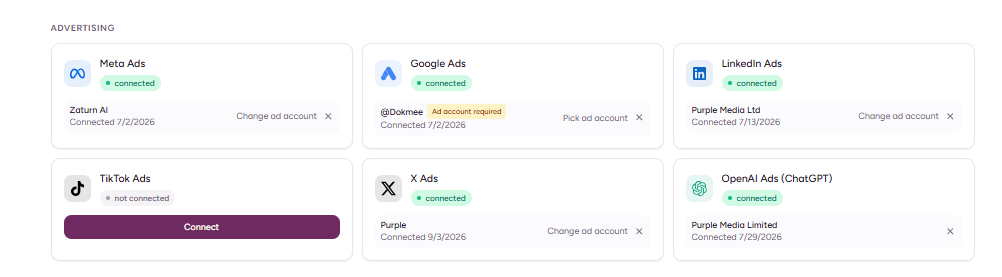
- One OpenAI Ads API key is tied to one ad account.
- Each ad account should be connected separately.
- The API key has campaign write access; OpenAI does not currently offer a read-only ads-key scope.
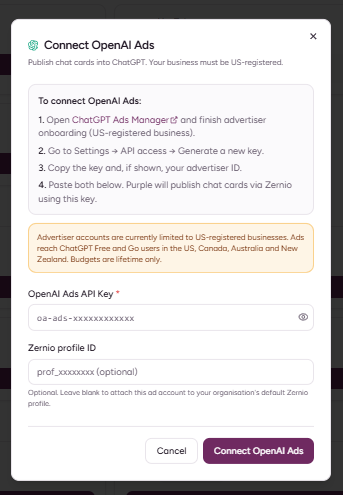
Never publish or share the API key itself.
How ChatGPT Ads work
Ads are separate from ChatGPT's answers.
A standard ad includes:
- Advertiser identity
- Title
- Short copy
- Landing page
- Image creative
OpenAI uses several relevance signals, including conversational context, the landing page, title, ad copy and advertiser-provided context hints. This makes the creative strategy different from simply bidding on a list of search keywords.
A better brief tells Purple+ when the offer is useful, not only what keyword you want.
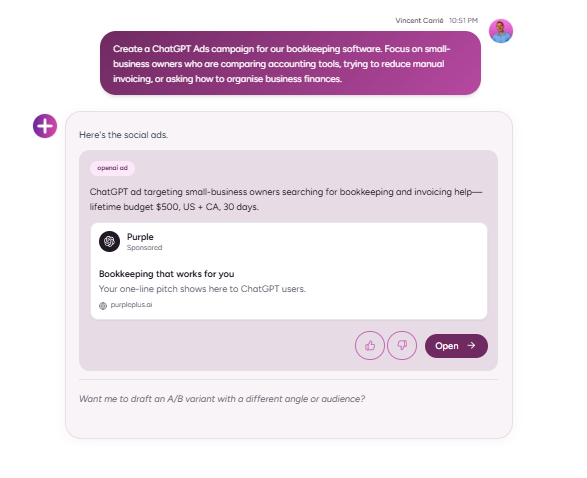
For example: Create a ChatGPT Ads campaign for our bookkeeping software. Focus on small-business owners who are comparing accounting tools, trying to reduce manual invoicing, or asking how to organise business finances.
Create a ChatGPT Ads campaign
Example: Create a ChatGPT traffic campaign for our project-management tool. UK, Australia. $1,500 lifetime budget for 30 days.
Purple+ can build the campaign, ad group and chat-card ad in one workflow.
Creative format
The current ChatGPT ad format uses an image-based card.
OpenAI's advertising format includes:
- Advertiser name
- Favicon / brand identity
- Title
- Description
- Destination
- Image
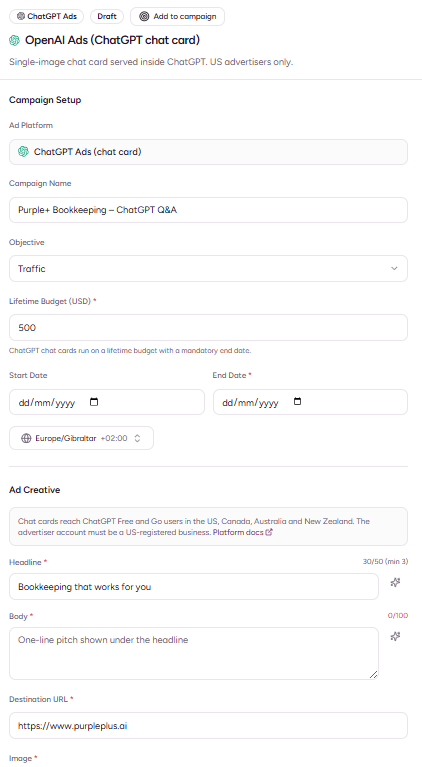
The integration uses a headline, body, image and destination URL for the ad.
When writing ChatGPT Ads, prefer:
- Specific benefits
- Clear use cases
- Straightforward language
- Different angles rather than near-duplicate copy
- A destination page that directly supports the promise
OpenAI recommends building multiple distinct variations so the system has more opportunities to match a useful message to relevant conversations.
Budgets
A key difference from many social platforms is that the current OpenAI API workflow uses lifetime budgets, not daily budgets.
That means your campaign brief should include an end date.
Example: Spend $2,000 total from 10 September to 10 October. Optimise for traffic.
Purple+ can then create the campaign with the correct lifetime-budget structure.
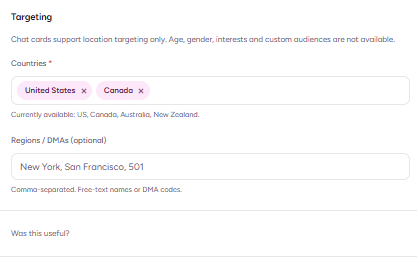
Targeting
The current API-supported targeting used by Purple+ is location-based.
Do not expect Meta-style controls for:
- Age
- Gender
- Interest targeting
- Uploaded custom audiences
If you try to treat ChatGPT Ads like Meta targeting, you will be over-specifying controls the current API does not expose.
Instead, put more effort into:
- The ad-group context
- The use case
- The landing page
- Distinct copy angles
- Conversion measurement
Conversion tracking
Purple+ can work with OpenAI conversion measurement.
This includes:
- Conversion pixel / tracking tag setup
- Conversion event configuration
- Server-side conversion events
Use conversion tracking when you want the campaign to optimise towards a real business action such as a purchase or qualified signup.
Review before publishing
Check:
- Correct OpenAI Ads account
- Goal
- Lifetime budget
- End date
- Locations
- Headline
- Body copy
- Image
- Destination URL
- Conversion event, if applicable
Keep the campaign in draft until you approve it.
What ChatGPT Ads are not
Ads do not influence ChatGPT's answers.
They are paid placements, shown separately and labelled as sponsored. Advertisers do not get access to users' private conversations or personal chat history through the ad product.
This distinction is important when writing or reviewing campaign messaging: the advertiser is buying a sponsored placement, not paying to change what ChatGPT says.
## Current limitations
The current integration does not support:
- Video creatives
- Boosting organic posts
- Creating custom audiences through the API
- Product-feed uploads through Purple+
- Daily budgets
Some features may still exist directly in OpenAI Ads Manager even when they are not available through the connected API workflow.
Key takeaway
ChatGPT Ads are context-led rather than keyword-led. The strongest Purple+ brief explains the customer situation, the value of the offer and the action you want — then uses clean creative and conversion measurement to improve the campaign over time.