How AI Facebook Ads Work
AI Facebook Ads use artificial intelligence to support campaign creation, audience targeting, creative generation, performance analysis, and ongoing optimization. Instead of relying solely on manual campaign management, AI analyzes advertising data, identifies patterns, and generates recommendations that help advertisers improve campaign performance throughout the lifecycle.
Rather than focusing on a single task, AI works across every stage of Facebook advertising. It can assist with campaign planning, audience research, ad generation, creative testing, and performance reporting, enabling marketers to make faster, decisions while maintaining full control over campaign objectives, targeting, and advertising strategy.
This guide covers how AI is used across Facebook Ads generally, and where a platform like Purple+ fits, specifically as the layer that creates ad assets, publishes campaigns, and brings results back.
How AI Supports Every Stage of a Facebook Ads Campaign
AI can assist throughout the Facebook Ads lifecycle, from campaign planning to ongoing refinement. It helps analyze campaign data, identify patterns, and generate recommendations that can improve targeting, creative performance, and budget efficiency.
A typical AI-supported workflow includes:
-
Defining the campaign objective and conversion goal.
-
Researching audiences and identifying targeting opportunities.
-
Generating headlines, primary text, calls to action, and creative concepts.
-
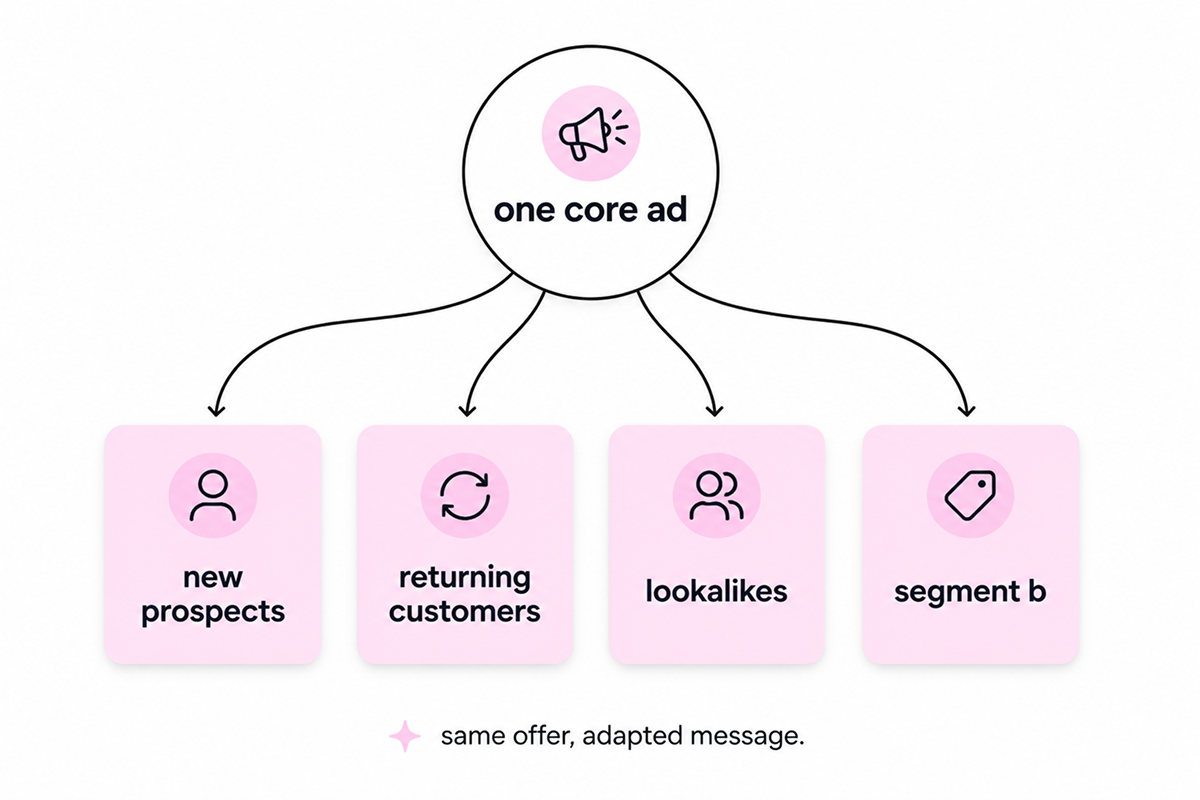
Creating multiple ad variations for different audience segments.
-
Reviewing and approving advertising assets before launch.
-
Monitoring metrics such as click-through rate, cost per result, conversions, ROAS, and frequency.
-
Identifying underperforming ads, audiences, or placements that may need attention.
-
Generating new creative variations based on campaign performance.
AI Facebook Ads tools help marketers spend less time on repetitive analysis and more time improving audience targeting, testing creative variations, and refining campaign strategy.
How an AI Facebook Ad Generator Creates Better Ads
An AI Facebook ad generator creates advertising assets based on the advertiser's information, rather than generating random content. The quality of the output depends on the campaign brief, including the objective, target audience, product or service, offer, and brand guidelines.
A typical workflow begins by defining the campaign goal, such as generating leads, increasing online sales, promoting an event, or driving website traffic. AI then uses this information to produce multiple advertising assets that can be reviewed and refined before publication.
Depending on the campaign, AI can generate:
-
primary ad text
-
headlines
-
descriptions
-
calls to action
-
image concepts
-
creative variations for different audience segments
-
alternative messaging for A/B testing
Instead of relying on a single advertisement, marketers can evaluate several versions and select the strongest combination for their campaign. Using ad creative AI also makes it easier to generate fresh creative concepts, refine messaging, and develop new ad variations without restarting the creative process for each campaign.
Where AI Improves Facebook Ad Optimization
Launching a Facebook Ads campaign is only the beginning. Performance changes as audiences respond to the ads, creative fatigue develops, competition increases, and campaign data accumulates. AI helps advertisers identify these changes and highlight improvements before they have a significant impact on results.
Rather than focusing on a single metric, AI analyzes multiple performance signals together to identify where attention is needed.
|
Campaign area |
How AI helps |
|---|---|
|
Audience targeting |
Identifies audience segments that drive stronger engagement, conversions, or return on ad spend, while highlighting those that may need refinement. |
|
Creative performance |
Compares headlines, primary text, images, and calls to action to identify the combinations that deliver the strongest results. |
|
Budget allocation |
Highlights campaigns or ad sets that may deserve additional budget based on performance trends. |
|
Ad frequency |
Flags creative fatigue by monitoring how often the same audience sees an advertisement, helping marketers decide when to introduce new creatives. |
|
Placement analysis |
Evaluates performance across Facebook Feed, Instagram Feed, Stories, Reels, Audience Network, and other placements to identify where campaigns perform best. |
|
Performance reporting |
Summarizes key metrics such as CTR, cost per result, conversion rate, CPM, and ROAS, making campaign analysis faster and more actionable. |
Instead of making decisions based on individual metrics, AI combines campaign data to identify practical opportunities for improving Facebook Ads performance.
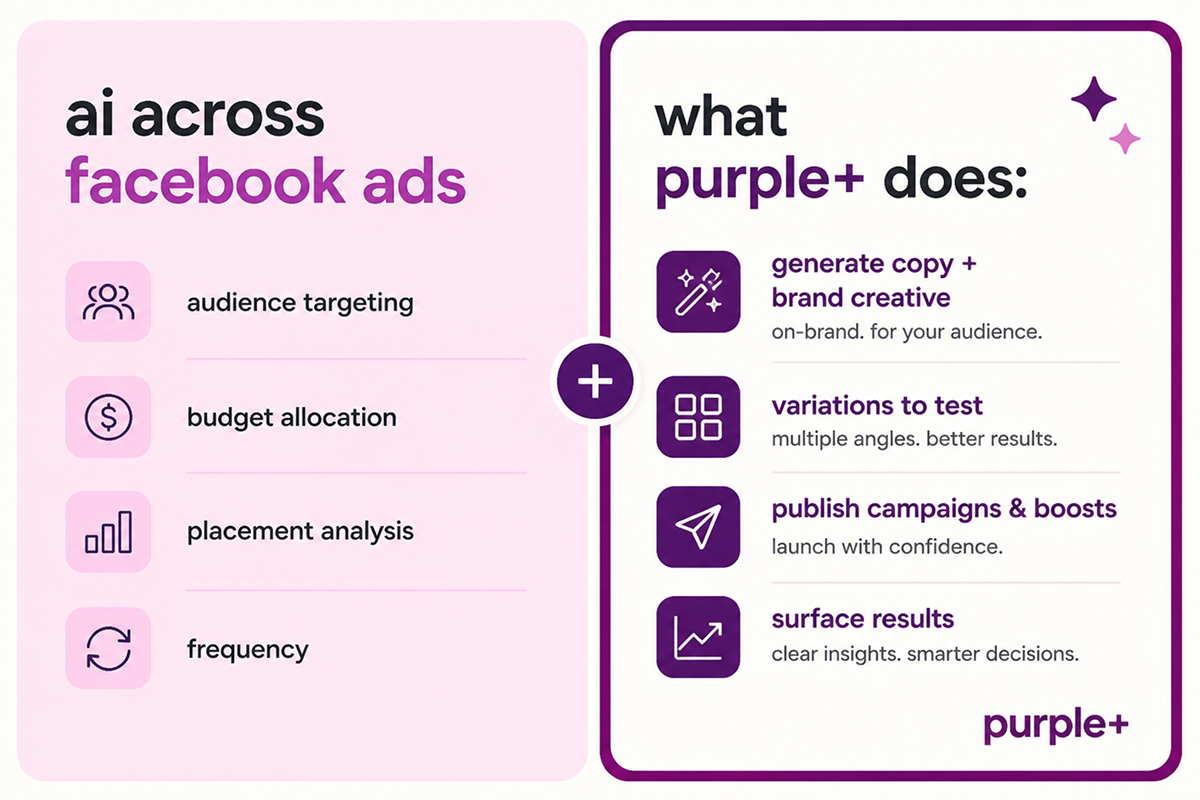
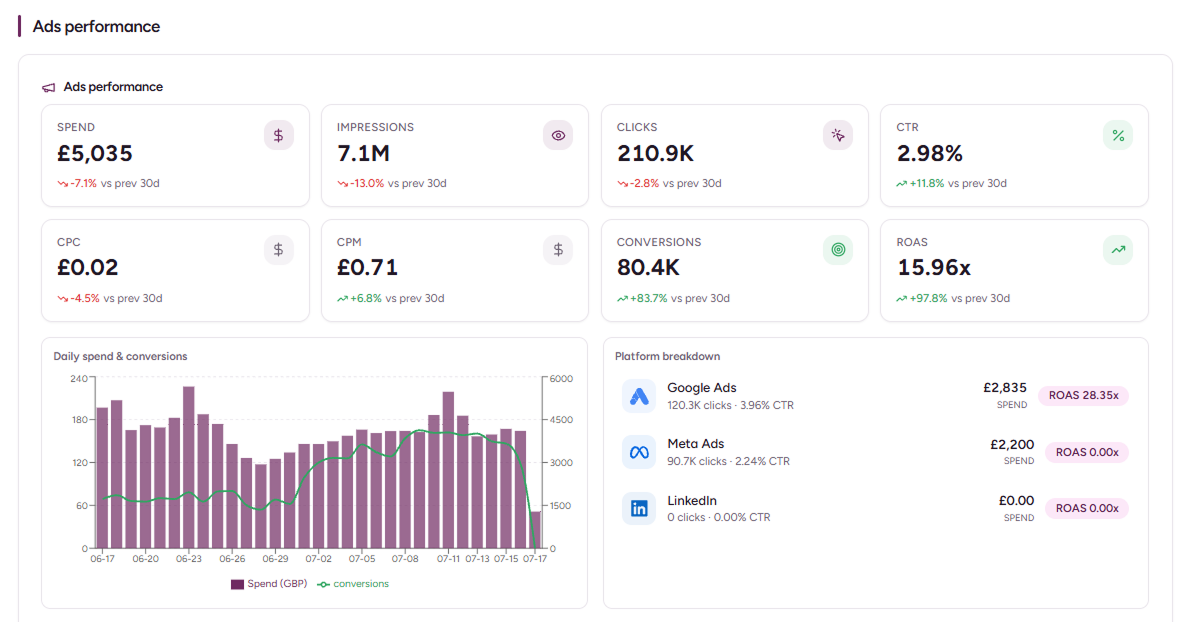
Where Purple+ fits: of the areas above, Purple+ specifically handles creative — generating headlines, primary text, CTAs, and brand-aware visuals, producing variations to test, publishing campaigns to your Meta Ads account, and surfacing spend, conversions, and ROAS in the Results tab. Audience, budget, and placement decisions stay with you and Meta's delivery system. Purple+ is the create-and-launch layer, not an autonomous budget optimizer.
Which Facebook Ads Tasks Can AI Automate?
AI is most effective when it automates repetitive tasks that rely on analyzing large volumes of campaign data. Strategic decisions — such as campaign objectives, offers, budgets, and audience selection — should remain under the advertiser's control.
|
Facebook Ads task |
How AI supports the workflow |
|---|---|
|
Audience research |
Identifies audience interests, behaviors, demographics, and lookalike opportunities based on campaign objectives. |
|
Audience segmentation |
Suggests audience groups with different characteristics, making it easier to personalize advertising for specific segments. |
|
Ad copy generation |
Produces primary text, headlines, descriptions, and calls to action based on the campaign brief and target audience. |
|
Creative variations |
Generates multiple advertising variations to support A/B testing without manually recreating each advertisement. |
|
Campaign structure |
Helps organize campaigns, ad sets, and creatives into a logical structure, simplifying management and reporting. |
|
Performance monitoring |
Analyzes campaign metrics, highlighting significant changes in engagement, conversions, cost per result, and return on ad spend. |
|
Optimization suggestions |
Identifies opportunities to improve audience targeting, creatives, placements, or campaign settings based on performance data. |
|
Reporting |
Summarizes campaign performance and highlights trends, making it easier to identify successful strategies and areas that require attention. |
AI automates analysis and content generation, but campaign success still depends on effective targeting, relevant offers, high-quality advertising creatives, and continuous optimization based on business objectives.
Features That Matter in Facebook Ads AI Software
The value of Facebook Ads AI software depends on how well it supports campaign management before and after an advertisement is published. Beyond generating advertising copy, the platform should help marketers organize campaigns, review performance, test new ideas, and continuously improve results.
When evaluating AI tools for Facebook Ads, look for:
|
Feature |
Why it matters |
|---|---|
|
AI ad generation |
Creates primary text, headlines, calls to action, and multiple advertising variations for different audiences and objectives. |
|
Brand-aware creative |
Generates ad visuals in your own brand colors and logo, ready to review instead of redo. |
|
Creative testing |
Produces alternative creatives for A/B testing inside one ad set, so budget isn't fragmented across duplicate campaigns. |
|
Direct publishing |
Publishes standalone campaigns and boosted posts straight to your connected Meta Ads account. |
|
Results reporting |
Surfaces spend, conversions, CPM, and ROAS so marketers can see what happened without opening Ads Manager. |
|
Campaign organization |
Keeps campaigns, ad sets, creatives, and assets structured, making them easier to manage as accounts grow. |
|
Collaboration and approvals |
Allows marketing teams to review, edit, comment on, and approve advertising assets before campaigns are published. |
|
Asset management |
Stores approved creatives, images, videos, and brand assets in one location for consistent use across campaigns. |
Managing Facebook campaigns as part of a paid advertising strategy also makes it easier to coordinate creatives, reporting, and results across multiple advertising channels rather than managing each platform independently.
Integrating AI into Your Facebook Ads Workflow
AI delivers the greatest value when it is integrated into the entire Facebook Ads workflow, rather than used only to generate advertising copy. Combining AI with a structured campaign process helps marketing teams produce better creatives, review performance more efficiently, and make decisions based on current campaign data.
A practical workflow includes:
-
Define the campaign objective and target audience.
-
Generate primary text, headlines, calls to action, and creative variations with AI.
-
Review advertising assets for accuracy, compliance, and alignment with brand guidelines.
-
Select the most relevant creatives for different audience segments and placements.
-
Publish and launch the campaign, then monitor engagement, conversions, cost per result, and ROAS.
-
Review campaign performance and identify opportunities to refresh creative.
-
Generate new creative variations and continue testing.
Purple+ supports the create-and-launch side of this workflow by combining AI-powered content generation, brand-aware creative, campaign planning, collaboration, and approvals in one place. It publishes standalone campaigns and boosted posts to your Meta Ads account, then surfaces spend, conversions, and ROAS in the Results tab so new creative variations can be generated and launched as campaigns evolve.
Build a Continuous Facebook Ads Process
Successful Facebook advertising depends on continuous improvement rather than a one-time campaign setup. Audience behavior changes, advertising costs fluctuate, and creative performance naturally declines as the same ads are shown repeatedly. Regular optimization helps campaigns remain relevant and cost-effective.
A structured process typically includes:
-
Review campaign performance against your advertising objectives.
-
Compare audience segments to identify where conversions and engagement are strongest.
-
Watch ad frequency to catch creative fatigue before performance declines.
-
Replace underperforming creatives with new headlines, primary text, images, or calls to action.
-
Refine audience targeting based on campaign insights and conversion data.
-
Adjust budgets according to campaign performance and business priorities.
-
Continue testing new creative variations to improve results over time.
AI speeds up this process by identifying patterns in campaign data and highlighting opportunities that might otherwise be overlooked, while the advertiser makes the strategic calls on budget, targeting, and offers.
Frequently asked questions
Written by
Founder & Director
Vincent Carrié is the Founder & Director of Purple Media, a full-service digital marketing agency in Gibraltar working with brands including Holland & Barrett, Vitabiotics, and Gibtelecom. Drawing on years of hands-on campaign experience, he's building Purple+ — an AI marketing agent that creates and publishes brand-aligned content across social, paid ads, SEO, and email from a single chat. He writes about applying AI to real marketing workflows, with a focus on what actually drives results for solopreneurs, SMBs, and agencies.