AI PPC Management: How AI Is Changing Paid Advertising

Paid advertising increasingly relies on automation to analyse campaign data, adjust bids, allocate budgets and identify patterns in audience behaviour. AI PPC management brings these capabilities together to make campaign optimisation faster and more data-driven.
AI can support many parts of paid advertising, from campaign creation and targeting to performance analysis and budget allocation. Its role is not limited to generating ad copy; machine learning systems can also process large volumes of campaign data and identify patterns that are difficult to evaluate manually.
What Is AI PPC Management?
AI PPC management uses artificial intelligence and machine learning to support the planning, optimisation and analysis of pay-per-click advertising campaigns.
Traditional PPC management requires marketers to review search terms, conversion data, bids, budgets, audiences and ad performance regularly. AI can process these signals at scale and identify patterns that can inform campaign decisions.
Automated bidding is one of the clearest examples. Advertising platforms can use conversion and contextual signals to adjust bids according to the likelihood of achieving a selected campaign objective.
AI PPC management can also support:
-
bid optimisation
-
conversion prediction
-
budget allocation
-
audience analysis
-
campaign performance analysis
-
ad and creative testing
-
identification of optimisation opportunities
The effectiveness of these systems depends heavily on the quality and volume of available data. AI does not remove the need for campaign strategy, accurate conversion tracking or appropriate business objectives.
How AI Is Used in PPC Management
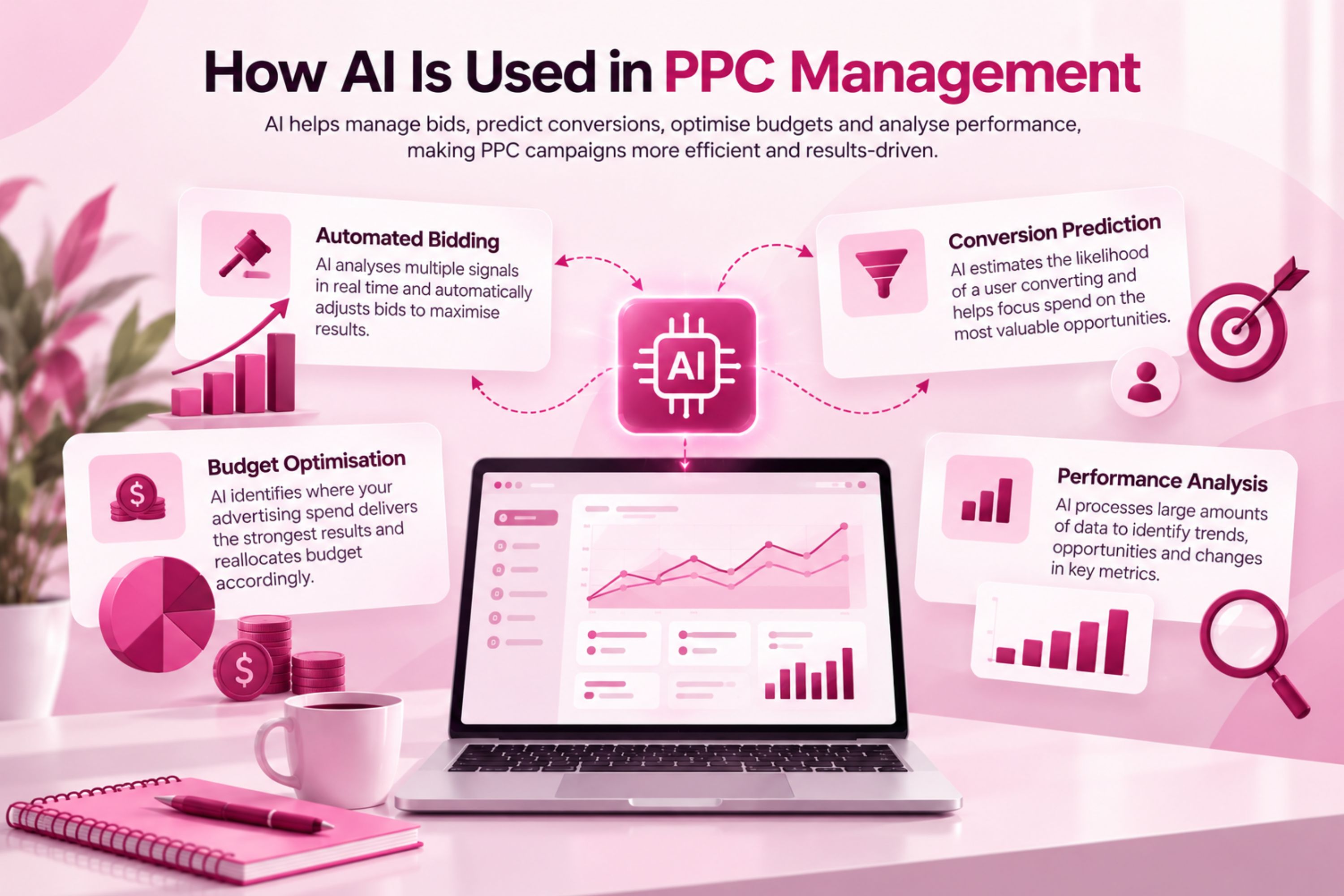
Automated Bidding
AI-powered bidding systems analyse signals such as device, location, time, audience characteristics and historical conversion behaviour to estimate the likelihood of a desired action.
Instead of manually assigning a bid to every auction, automated bidding adjusts bids based on the probability of achieving the selected goal.
Google Ads uses machine learning in its automated bidding systems to optimise bids based on objectives such as conversions, conversion value, or return on ad spend. The broader process of using AI for Google Ads also includes campaign planning, keyword research, ad creation, and performance analysis.
Conversion Prediction
AI can estimate the probability that a user will convert based on available historical and contextual signals.
These predictions can help advertising systems decide where to allocate bids and budget. Prediction quality depends on conversion tracking, sufficient data, and a clearly defined conversion event.
Budget Optimisation
AI can analyse campaign performance and identify where advertising spend is producing stronger results.
Budget optimisation can involve reallocating spend between campaigns, audiences, or other campaign components based on performance signals. However, automated recommendations still need to be evaluated against business priorities, margins and customer acquisition targets.
Performance Analysis
Manual PPC analysis becomes difficult as the number of campaigns, keywords, audiences and advertisements increases.
AI can process large datasets and identify changes in metrics such as conversion rate, cost per acquisition, click-through rate and return on ad spend. This allows marketers to investigate significant changes without manually reviewing every campaign element.
AI Performance Marketing: Optimising for Business Outcomes
AI performance marketing applies machine learning and automation to advertising activities that are measured against specific business outcomes.
The focus is broader than generating clicks. Campaigns may be evaluated using conversions, revenue, customer acquisition cost, return on ad spend or another defined commercial objective.
AI can connect advertising decisions to these outcomes by analysing conversion data and identifying patterns across audiences, creatives, placements, and campaign settings.
This makes accurate measurement particularly important. If conversion tracking is incomplete or the selected conversion doesn't represent a meaningful business outcome, AI optimisation can work toward the wrong objective.
AI Ad Campaign Management
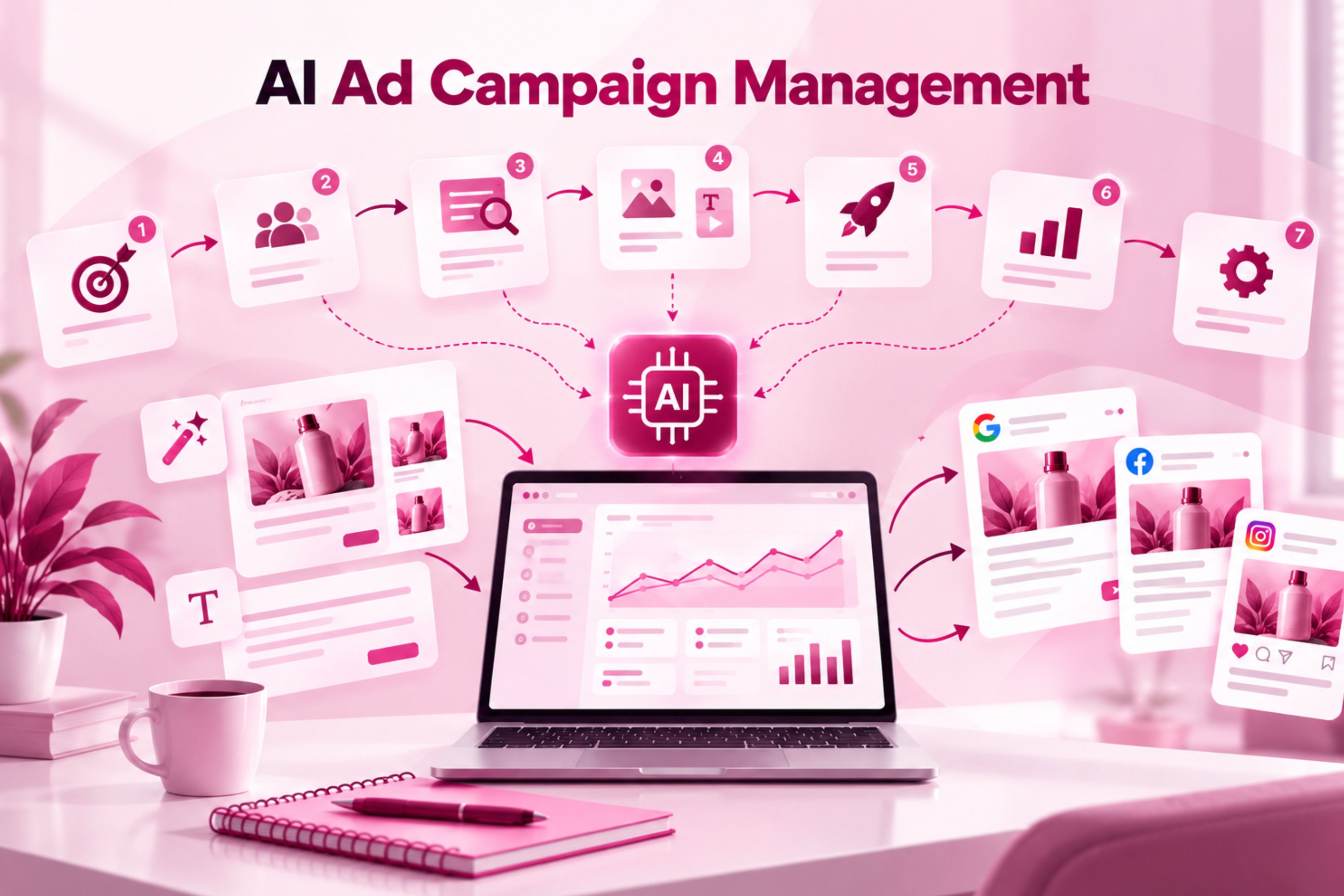
An AI ad campaign can use artificial intelligence at several stages of the campaign lifecycle.
Before launch, AI can help generate campaign structures, advertising copy, creative variations and audience recommendations. During the campaign, it can analyse performance data and identify changes that may require attention.
A typical AI-supported campaign process includes:
-
Defining the campaign objective.
-
Identifying the target audience.
-
Preparing keywords, audiences and creative assets.
-
Launching the campaign.
-
Monitoring performance data.
-
Identifying optimisation opportunities.
-
Testing new campaign variations.
The degree of automation varies between advertising platforms and tools. Some systems can automatically adjust bids, while other AI tools primarily support research, content generation or analysis.
AI Ad Targeting
AI ad targeting uses behavioural, contextual, and conversion data to identify audiences more likely to respond to an advertisement.
Targeting systems can analyse signals such as previous interactions, website activity, customer characteristics and conversion behaviour. Available signals depend on the advertising platform, campaign type, and applicable privacy restrictions.
AI targeting is particularly useful for campaigns with large audiences and substantial behavioural data. Instead of relying only on manually defined audience segments, machine learning can identify patterns within available data.
AI Targeted Marketing vs AI Targeted Advertising
AI targeted marketing is a broader concept that can include personalised content, email marketing, recommendations and customer segmentation.
AI targeted advertising specifically concerns paid advertisements and the selection, delivery or optimisation of advertising for particular audiences.
The two approaches can use similar customer data, but their objectives and execution are different. AI targeted marketing may cover the entire customer relationship, while AI targeted advertising focuses on paid media.
AI Facebook Ad Optimization
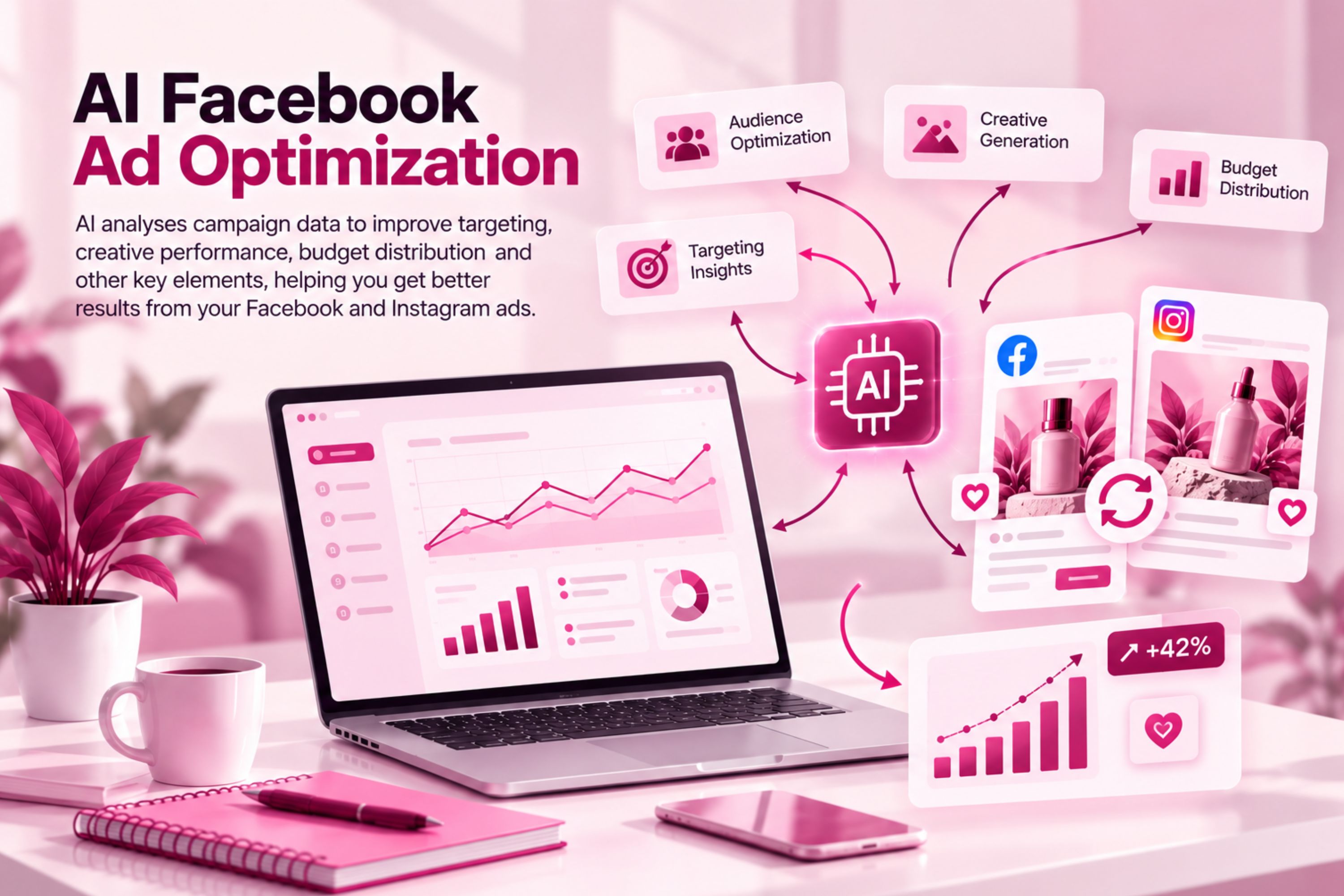
AI Facebook ad optimization involves analysing campaign signals to identify opportunities to improve audience targeting, creative performance, budget distribution and other campaign elements.
Facebook and Instagram advertising systems can evaluate large volumes of data across audiences, placements and creative combinations. This lets machine learning identify patterns that may not be obvious when manually reviewing individual ads.
AI Facebook Ads capabilities include campaign creation, creative generation, audience analysis and performance monitoring, allowing AI to support several stages of Meta advertising.
AI can also help identify creative fatigue. If an advertisement is repeatedly shown to the same audience and engagement declines, performance data can indicate that new creative variations or targeting adjustments may be required.
AI Programmatic Advertising
AI programmatic advertising uses artificial intelligence and machine learning to automate parts of buying and delivering digital advertising inventory.
Programmatic systems can evaluate available impressions and use data to determine which impressions are relevant and how much to bid.
This process happens at a scale that would be difficult to replicate through manual media buying. Decisions can be made across large numbers of impressions while campaigns are running.
Programmatic Advertising AI: How It Works
Programmatic advertising AI combines automated media buying with machine learning models that analyse advertising and audience data.
The system may consider factors such as:
-
audience characteristics
-
contextual information
-
historical campaign performance
-
device
-
location
-
time
-
placement
-
conversion probability
The available signals and optimisation methods depend on the advertising platform and campaign configuration.
AI in Programmatic Advertising
AI in programmatic advertising can support several areas of automated media buying.
Audience Prediction
Machine learning can analyse historical behaviour and conversion patterns to identify audiences that are more likely to respond to an advertisement.
Bid Optimisation
AI can estimate the value of an individual impression and set an appropriate bid based on the campaign objective.
Inventory Selection
Programmatic systems can evaluate available advertising inventory and identify impressions that match campaign requirements.
Creative Optimisation
AI can compare creative performance and help identify which combinations of messaging, visuals, and formats produce stronger results.
Budget Allocation
Performance data can identify campaigns, audiences, or placements that drive stronger results and may justify additional spend.
These processes allow programmatic advertising to operate across large numbers of auctions without requiring manual decisions for every impression.
AI and Programmatic Advertising: What Is the Difference?
AI is the technology used to analyse data, make predictions and automate decisions. Programmatic advertising is the automated process of buying and delivering digital advertising inventory.
They are therefore related but not interchangeable.
AI can improve programmatic advertising by helping systems evaluate audiences, predict conversion probability and optimise bids. Programmatic advertising provides the automated media-buying environment in which those decisions are executed.
Artificial Intelligence in Media Buying
Artificial intelligence in media buying changes how advertisers evaluate inventory, audiences and campaign performance.
Traditional media buying often involves selecting publishers, placements and audiences based on predefined criteria. AI can add predictive analysis by evaluating large datasets and identifying patterns associated with campaign outcomes.
This helps media buyers compare opportunities more efficiently and respond faster to performance changes.
Human oversight remains important because media buying decisions also involve factors not represented in historical campaign data, including brand suitability, strategic priorities, and changing market conditions.
Artificial Intelligence in Digital Advertising
Artificial intelligence in digital advertising covers a much broader range of applications than PPC bidding.
AI can support:
-
audience segmentation
-
advertising creative generation
-
campaign analysis
-
personalisation
-
predictive modelling
-
budget optimisation
-
automated bidding
-
performance reporting
Practical applications vary by advertising platform and campaign type. AI advertising examples show AI applications across campaign creation, personalisation, creative testing, and performance analysis.
Machine Learning in Digital Advertising
Machine learning in digital advertising lets systems identify patterns in historical data and use them to make predictions.
For example, a model can analyse previous conversion behaviour and estimate which users, impressions or campaign conditions are associated with a higher probability of conversion.
The model can then use these predictions to support advertising decisions.
Machine learning does not mean a system understands the campaign the way a marketer does. It identifies statistical relationships within the data it receives.
Machine Learning in Online Advertising
Machine learning in online advertising is used across search, social, display and programmatic campaigns.
Applications include:
-
automated bidding
-
audience modelling
-
conversion prediction
-
recommendation systems
-
creative analysis
-
campaign performance analysis
-
fraud detection
The value of machine learning depends on the data available to the system. Poor tracking, limited conversion volume or inconsistent campaign structures can reduce the usefulness of automated optimisation.
Machine Learning and Advertising: What Does It Optimise?
Machine learning and advertising systems can optimise different campaign variables depending on the platform and objective.
Common optimisation areas include:
-
bids
-
conversions
-
conversion value
-
audience delivery
-
creative combinations
-
placements
-
budget distribution
The system does not necessarily optimise every variable at the same time. The campaign configuration and the advertising platform's capabilities define the optimisation target.
What Data Does AI PPC Management Need?
AI PPC management depends on reliable campaign data.
Important inputs can include:
-
conversion data
-
transaction values
-
campaign performance
-
audience interactions
-
search terms
-
advertising creative performance
-
landing page behaviour
-
historical campaign data
Conversion tracking is particularly important because many automated advertising systems optimise towards conversion-related goals.
Data quality matters as much as data volume. If conversions are recorded incorrectly or important actions are missing, the system may optimise against an inaccurate representation of business performance.
When Does AI PPC Management Work Best?
AI PPC management is most useful when enough reliable data exists for the system to identify meaningful patterns.
It tends to be more effective when:
-
conversion tracking is accurate
-
campaign objectives are clearly defined
-
sufficient historical data is available
-
campaign structures are consistent
-
performance can be measured against meaningful business outcomes
AI is less useful when campaigns have very little data, conversion tracking is unreliable or the optimisation objective changes frequently.
Automation should therefore support a clear PPC strategy rather than replace one.
Common AI PPC Management Problems
AI-based advertising systems can produce poor results when the inputs or objectives are wrong.
Poor Conversion Tracking
If important conversions are missing or misconfigured, automated bidding may optimise toward the wrong outcome.
Insufficient Data
Machine learning needs data to identify patterns. Very small campaigns may not provide enough information for reliable optimisation.
Incorrect Objectives
A campaign optimised for clicks may produce a different result from one optimised for qualified leads or revenue. The selected objective needs to reflect the actual business goal.
Creative Fatigue
Automated targeting can't indefinitely compensate for advertising that no longer attracts attention. Creative assets still need to be reviewed and refreshed.
Loss of Strategic Control
Automation can make campaign management more efficient, but marketers still need to define objectives, budgets, brand requirements and acceptable acquisition costs.
AI PPC Management and Programmatic Advertising
AI PPC management and programmatic advertising use similar technologies but operate in different advertising environments.
PPC management typically focuses on paid search and other performance-based advertising campaigns where clicks, conversions or conversion value are key metrics.
Programmatic advertising focuses on automated buying of digital advertising inventory, particularly across display, video and other programmatic channels.
Both can use machine learning for bidding, targeting and performance optimisation. The main difference is the advertising environment and buying process in which the technology is applied.
How AI Changes Paid Advertising Management
AI changes paid advertising management by moving more campaign decisions from manual analysis towards automated, systems.
Instead of manually reviewing every bid, audience or performance signal, marketers can use AI to process large datasets and identify patterns that require attention.
This does not eliminate the PPC manager's role. Strategy, measurement, budget decisions, creative direction and business objectives still require human input.
The main shift is from manually managing every campaign variable to setting the right objectives, providing reliable data, reviewing automated decisions and improving campaigns based on measurable results.
AI works best as part of a controlled advertising workflow: the system processes data and automates defined tasks, while marketers retain responsibility for the strategy and commercial decisions behind the campaigns.
Frequently asked questions
Written by
AI & SEO Content writer
Tetiana Reusche is an SEO Content Strategist and AI marketing specialist who specialises in creating content that helps businesses improve their online visibility and turn organic traffic into business growth. Her work combines search strategy, content marketing, and AI-driven optimisation to produce content that performs across search engines, answer engines, and modern AI-powered discovery platforms. Over the years, she has developed SEO strategies and content frameworks for companies in the SaaS, software, miltech, travel, real estate, home renovation, lifestyle, and entertainment industries. She enjoys translating complex topics into practical, engaging content that is valuable for both readers and search engines. Tetiana focuses on building topical authority through strategic keyword research, content planning, search intent analysis, and well-structured content ecosystems. She regularly creates keyword clusters, content recommendations, editorial roadmaps, and SEO strategies that help brands reach the right audience, strengthen their authority, and generate meaningful business results. Her articles explore SEO, AI-powered marketing, social media management, content strategy, and digital growth, with a practical focus on helping businesses create discoverable, useful content designed to convert.