How to Use ChatGPT for Google Ads

Creating successful Google Ads campaigns requires more than writing persuasive advertisements. Strong campaign performance depends on search intent, well-organised keywords, audience targeting, relevant landing pages, compelling ad copy, and continuous optimisation. ChatGPT for Google Ads helps marketers prepare these elements more efficiently by supporting research, campaign planning, and content development before campaigns are launched.
Many businesses now combine ChatGPT with a broader marketing workflow instead of using it only to generate text.
Unlike Google Ads, ChatGPT does not manage campaigns or optimise bids automatically. Its role is to organise information, develop campaign structures, generate advertising copy, refine messaging, and create multiple creative variations from a single campaign brief.
This allows marketers to evaluate more advertising concepts before investing budget in live campaigns.
Businesses adopting AI across the entire marketing process often achieve greater efficiency than those using it only for copywriting.
Combining campaign planning, paid advertising, content creation, and optimisation within the same workflow creates a more consistent marketing process, which is why many organisations are integrating AI into every stage of campaign development.
How to Use ChatGPT to Plan Google Ads Campaigns
Campaign planning is one of the most valuable applications of ChatGPT for Google Ads management. Before selecting keywords or creating advertisements, marketers need a campaign structure that reflects business objectives, customer intent, and how potential customers search for products or services.
Instead of starting with a blank page, ChatGPT helps transform campaign ideas into an organised plan. It can group keywords by search intent, suggest logical ad groups, develop messaging themes, identify value propositions, and prepare advertising concepts for different stages of the customer journey.
As a result, campaign development becomes more structured before work begins inside Google Ads:
-
Define the campaign objective and primary conversion goal.
-
Describe the target audience, products or services, and competitive advantages.
-
Organise keywords into logical ad groups based on search intent.
-
Develop messaging that reflects different customer needs and buying stages.
-
Generate multiple Responsive Search Ad headlines, descriptions, and calls to action.
-
Review every advertising asset for accuracy, brand consistency, and compliance with Google Ads policies before publication.
Purple+ extends this workflow by connecting directly with ChatGPT, Claude, and Gemini. Once connected, marketing teams can draft advertising copy, prepare campaign assets, organise reviews, approve content, and manage publishing using natural language, while every action runs inside the Purple+ workspace.
Instead of moving content between AI tools, documents, spreadsheets, and advertising platforms, teams work within one connected environment that keeps campaign planning organised and significantly reduces manual administration.

Using ChatGPT to Create Google Ads Assets
One of the most practical uses of ChatGPT for Google Ads is preparing campaign assets before they are uploaded to Google Ads. Rather than writing every advertisement from scratch, marketers can use ChatGPT to produce multiple content variations that support different campaign objectives, audience segments, and search intent.
ChatGPT can help generate:
-
Responsive Search Ad headlines
-
ad descriptions
-
calls to action
-
sitelink and callout ideas
-
Performance Max text assets
-
promotional messaging
-
landing page headlines and supporting copy
-
campaign-specific offers for seasonal promotions
For example, a software company launching a project management platform may want to attract businesses looking to improve productivity, automate repetitive work, strengthen collaboration, or reduce operating costs.
Instead of creating separate advertisements for every message, ChatGPT can generate multiple headline and description combinations that emphasise different customer benefits while supporting the same campaign objective.
Preparing several advertising variations before launch also creates a stronger testing framework. Marketing teams can compare different value propositions, calls to action, promotional offers, messaging styles, and ad creative AI concepts before publishing campaigns, selecting the combinations that best align with user intent and expected search behaviour.
This approach gives advertisers a broader library of approved campaign assets rather than relying on a single version of an advertisement. As performance data becomes available, successful messaging can be expanded while weaker combinations are replaced, creating a more efficient and structured Google Ads workflow.

ChatGPT vs Manual Google Ads Campaign Preparation
Preparing a Google Ads campaign manually usually involves several separate tasks, including keyword organisation, campaign planning, copywriting, internal reviews, and creative revisions.
ChatGPT for Google Ads streamlines much of this preparation by helping marketers structure campaigns, generate advertising content, and develop multiple ideas before anything is uploaded to Google Ads.
|
Manual campaign preparation |
Using ChatGPT for Google Ads |
|
Start every campaign with a blank document |
Build campaigns from a structured brief that includes business goals, products, audiences, and search intent |
|
Write headlines and descriptions one at a time |
Generate multiple Responsive Search Ad headlines and descriptions in a single session |
|
Organise keywords and ad groups manually |
Group keywords around search intent and suggest logical campaign structures |
|
Rewrite advertising for different products or audiences |
Adapt messaging for different products, services, offers, or customer segments within minutes |
|
Develop seasonal campaigns from scratch |
Create campaign-specific messaging for launches, promotions, holidays, or limited-time offers |
|
Compare a small number of advertising concepts |
Evaluate multiple headlines, descriptions, value propositions, and calls to action before publication |
The biggest advantage of ChatGPT Google Ads workflows is speed without sacrificing creative flexibility. Marketing teams can explore more messaging ideas, prepare campaigns faster, and begin testing with a broader range of approved advertising assets.
ChatGPT supports campaign preparation, but it does not replace strategic decision-making. Keyword selection, bidding strategies, audience targeting, budget allocation, performance analysis, and campaign optimisation still rely on marketer expertise and live Google Ads data.
Which Google Ads Tasks Can ChatGPT Help With?
ChatGPT for Google Ads delivers the greatest value before campaigns go live. It helps marketers organise ideas, prepare advertising content, and structure campaigns more efficiently, reducing the time spent on repetitive planning and copywriting while leaving strategic decisions in human hands.
It can support a wide range of campaign preparation tasks, including:
-
organising keywords into logical ad groups based on search intent;
-
generating Responsive Search Ad headlines and descriptions;
-
creating calls to action for different audience segments;
-
developing campaign messaging for product launches, seasonal promotions, and limited-time offers;
-
writing landing page headlines and supporting copy that match advertising messages;
-
suggesting sitelinks, callouts, and structured snippets;
-
analysing competitor messaging to identify opportunities for differentiation;
-
preparing campaign briefs for internal reviews and client approvals.
For example, a business launching several products at the same time can use ChatGPT to prepare separate messaging for each product line, organise keywords by customer intent, and create multiple advertising variations before campaign setup begins.
Instead of switching between spreadsheets, documents, and copywriting tools, marketers can prepare most campaign materials from a single structured brief.
Using Google Ads ChatGPT workflows does not replace campaign management. It helps advertisers enter Google Ads with organised campaign structures, stronger advertising copy, and a wider selection of approved assets, allowing more time to focus on testing, optimisation, and improving campaign performance once advertisements are live.
What ChatGPT Cannot Do for Google Ads
While ChatGPT for Google Ads simplifies campaign planning and content creation, it is not a replacement for Google Ads or a campaign management platform. ChatGPT generates responses from the information you provide and has no direct connection to your advertising account or live campaign data.
It cannot:
-
access Google Ads accounts or account settings;
-
monitor campaign performance in real time;
-
adjust bids or bidding strategies;
-
pause, activate, or edit campaigns;
-
change budgets or audience targeting automatically;
-
review Search Terms reports or conversion tracking data;
-
optimise campaigns using live performance metrics.
For example, ChatGPT can create multiple Responsive Search Ad headlines, but it cannot determine which combination delivers the highest click-through rate or conversion rate because it cannot see live campaign performance.
It can recommend campaign structures, keyword themes, or advertising approaches, but decisions based on Quality Score, bidding performance, search queries, or return on ad spend require data from Google Ads.
This distinction is important. ChatGPT helps marketers prepare stronger campaigns before they are launched, while Google Ads provides the performance data needed to measure results and optimise advertising over time.
Combining both creates a more effective AI for Google Ads workflow, where AI-generated content supports campaign preparation while Google Ads provides the performance data needed for optimisation and long-term growth.
Building a Smarter Google Ads Workflow with ChatGPT
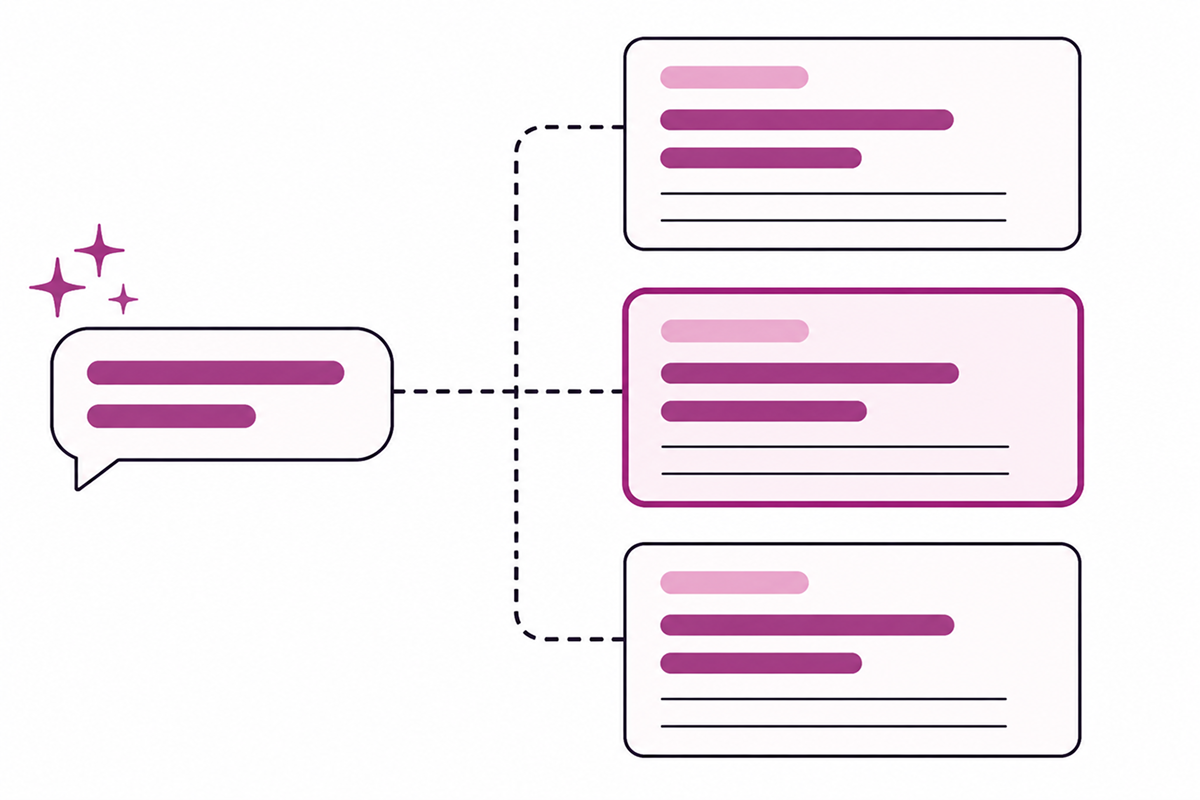
The greatest value of ChatGPT for Google Ads comes from making campaign preparation more structured and repeatable.
Rather than using ChatGPT only to write advertisements, businesses can integrate it into every stage of campaign development, from the initial brief to the final review before publication.
A practical workflow typically includes:
-
Define the campaign objective, target audience, and desired conversion action.
-
Organise keywords into ad groups based on search intent.
-
Generate Responsive Search Ad headlines, descriptions, calls to action, and campaign messaging with ChatGPT.
-
Review advertising assets to ensure they reflect brand guidelines and comply with Google Ads policies.
-
Match advertisements with relevant landing pages to create a consistent user experience.
-
Publish campaigns in Google Ads and monitor performance using live campaign data.
-
Apply campaign insights to refine messaging, improve creative assets, and strengthen future campaigns.
Following a structured workflow also improves collaboration. Copywriters, PPC specialists, designers, and marketing managers can review campaign materials before launch, reducing unnecessary revisions and helping every advertising asset support the same campaign objective.
As campaigns grow, this process becomes even more valuable. Instead of rebuilding campaigns from scratch, businesses can reuse successful messaging, expand high-performing creative concepts, and develop new campaign variations using insights gained from previous Google Ads performance.
Benefits of Using ChatGPT for Google Ads
Integrating ChatGPT for Google Ads into campaign planning helps businesses prepare advertising more efficiently while improving the quality and consistency of campaign assets.
Instead of replacing Google Ads or PPC specialists, ChatGPT supports the preparation process by reducing repetitive work and making campaign development more structured.
Businesses that incorporate ChatGPT into their Google Ads workflow can:
-
prepare campaigns more quickly from a structured campaign brief;
-
generate multiple Responsive Search Ad headlines and descriptions for testing;
-
organise keywords into logical ad groups based on search intent;
-
develop consistent messaging across advertisements and landing pages;
-
create campaign-specific content for new products, seasonal promotions, and special offers;
-
improve collaboration by producing campaign materials that are easier to review and approve;
-
begin campaigns with a wider range of advertising creatives, increasing opportunities for testing and optimisation.
The role of ChatGPT in Google Ads is also expanding. As language models become more capable, they will provide more accurate search intent analysis, stronger campaign planning, improved audience-focused messaging, and better support for developing advertising assets at scale.
Businesses that adopt ChatGPT Google Ads workflows today will be better positioned to build campaigns faster, test more creative approaches, and expand those capabilities across a broader AI marketing strategy as customer behaviour, search trends, and AI-powered advertising continue to evolve.
Frequently asked questions
Written by
AI & SEO Content writer
Tetiana Reusche is an SEO Content Strategist and AI marketing specialist who specialises in creating content that helps businesses improve their online visibility and turn organic traffic into business growth. Her work combines search strategy, content marketing, and AI-driven optimisation to produce content that performs across search engines, answer engines, and modern AI-powered discovery platforms. Over the years, she has developed SEO strategies and content frameworks for companies in the SaaS, software, miltech, travel, real estate, home renovation, lifestyle, and entertainment industries. She enjoys translating complex topics into practical, engaging content that is valuable for both readers and search engines. Tetiana focuses on building topical authority through strategic keyword research, content planning, search intent analysis, and well-structured content ecosystems. She regularly creates keyword clusters, content recommendations, editorial roadmaps, and SEO strategies that help brands reach the right audience, strengthen their authority, and generate meaningful business results. Her articles explore SEO, AI-powered marketing, social media management, content strategy, and digital growth, with a practical focus on helping businesses create discoverable, useful content designed to convert.