AI Advertising Examples: How Businesses Use AI to Improve Advertising Campaigns

Artificial intelligence has become a practical tool for planning, creating, and optimising advertising campaigns. Businesses use AI to generate advertising creatives, analyse campaign performance, personalise messaging, identify audience segments, and support faster decision-making throughout the advertising lifecycle.
The most useful AI advertising examples show how artificial intelligence solves real advertising challenges rather than simply automating individual tasks. A retailer launching a seasonal promotion can generate multiple advertisements for different customer segments from a single campaign brief. A software company can test different value propositions before spending advertising budget, while a financial services provider can tailor messaging to investors with different levels of experience.
AI also improves advertising after campaigns are launched. By analysing campaign performance, audience behaviour, conversion paths, and creative engagement, it helps advertisers identify optimisation opportunities, refine targeting, and make decisions based on measurable results instead of assumptions.
Examples of How Businesses Use AI to Create More Effective Advertising Campaigns
Campaign creation is one of the clearest AI advertising examples because it combines planning, creative production, and audience personalisation within a single workflow.
Instead of creating every advertisement manually, marketers begin with a campaign brief that defines the objective, target audience, product or service, promotional offer, and key message.
AI then produces multiple headlines, advertising copy, calls to action, visual concepts, and creative variations that can be reviewed before publication.
The same workflow can be applied across different industries. An ecommerce retailer may prepare separate advertisements for first-time visitors, returning customers, and loyalty programme members. A property developer can promote investment opportunities, family homes, and premium residences using different messaging while supporting the same campaign. A university can adapt advertisements for undergraduate applicants, postgraduate students, and international audiences without rebuilding the campaign for every segment.
Preparing multiple advertising creatives before launch also improves campaign quality. Marketing teams can compare different messages, promotional offers, creative formats, and customer value propositions before investing advertising budget.
Rather than testing one advertisement against another, advertisers begin with a wider portfolio of approved creatives. Campaign performance is then measured using metrics such as click-through rate (CTR), conversion rate, cost per acquisition (CPA), and return on ad spend (ROAS), making AI in advertising examples a practical demonstration of how artificial intelligence improves advertising before campaigns go live.

Personalising Advertising Examples for Different Audiences
One of the most valuable AI advertising examples is audience personalisation. A single advertisement rarely performs equally well across every audience because customer interests, buying intent, purchase history, and demographics all influence how people respond to advertising.
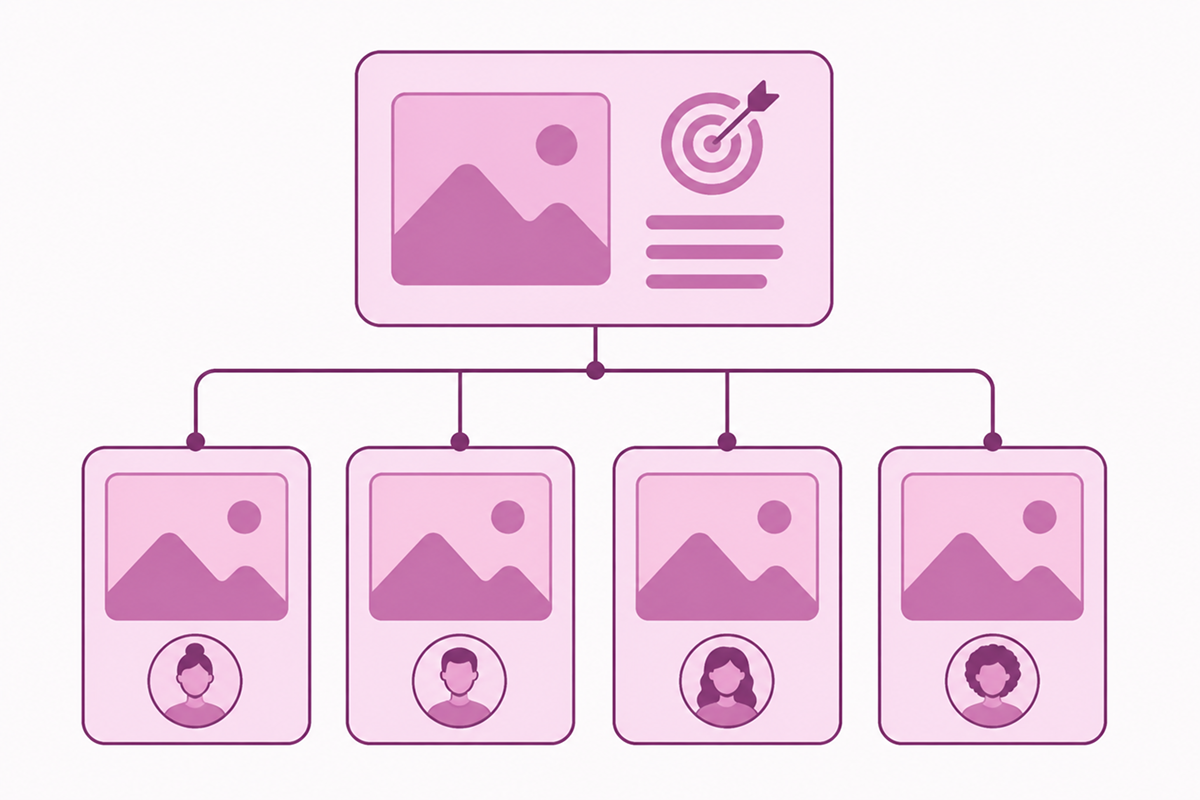
Instead of creating separate campaigns manually, AI generates multiple advertising variations from the same campaign brief. Messaging, offers, visuals, and calls to action can all be adapted for different customer segments while maintaining consistent branding and campaign objectives.
For example, a financial services company promoting investment products may create different advertisements for first-time investors, experienced traders, and clients planning for retirement. Each audience receives messaging that reflects its priorities, while the overall campaign continues to support the same commercial objective.
Retailers apply the same approach to product advertising. Customers who recently viewed running shoes can receive advertisements highlighting sports footwear, while returning shoppers may see complementary products or exclusive offers based on previous purchases. AI can also personalise campaigns using browsing history, abandoned baskets, seasonal interests, customer lifetime value, or loyalty status.
These AI in advertising examples show how personalisation extends beyond inserting a customer's name into an advertisement. It enables businesses to deliver more relevant advertising throughout the customer journey, increasing engagement, improving conversion rates, and making better use of advertising budgets.
Examples of Improving Advertising Performance with AI
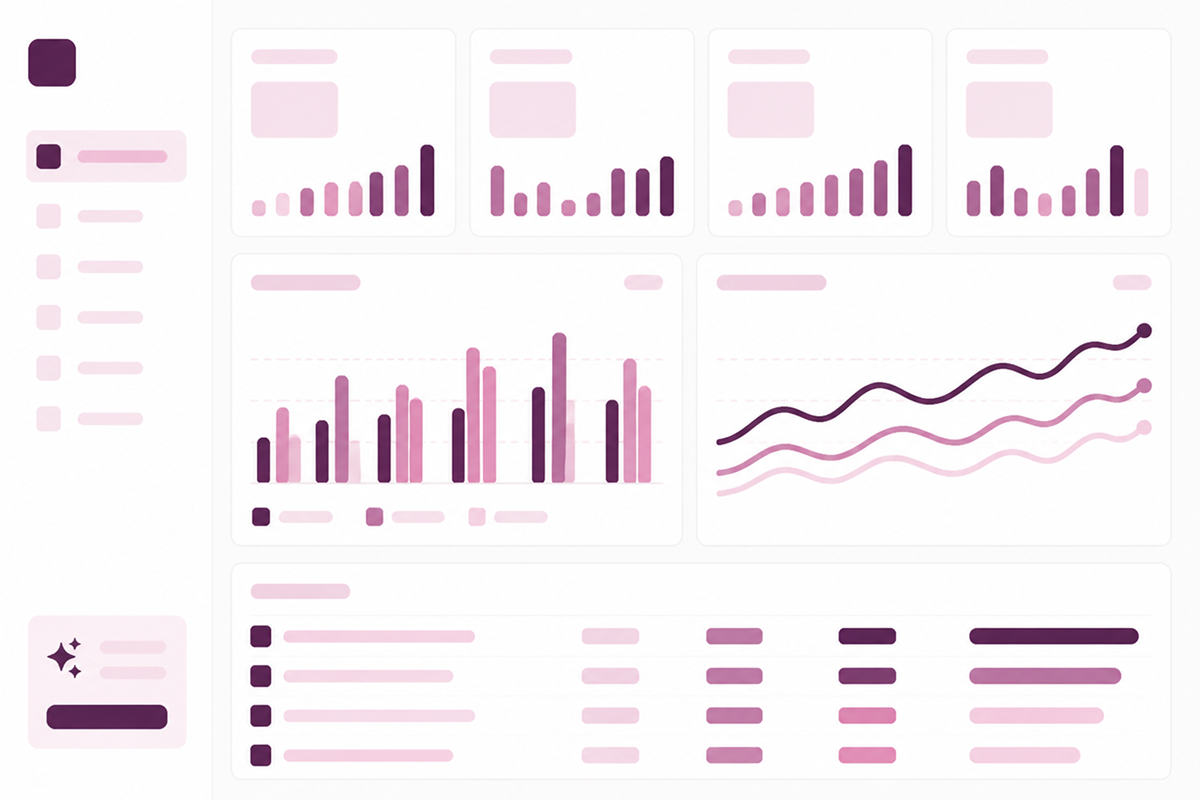
Advertising optimisation begins when campaigns start generating measurable performance data. One of the strongest AI advertising examples is using artificial intelligence to analyse campaign results, identify optimisation opportunities, and recommend improvements while campaigns are still running.
For example, a retailer advertising across Google Ads, Meta Ads, and display advertising may discover that carousel creatives produce more sales than static images, even though both receive similar click-through rates. By analysing conversion data, audience behaviour, and attribution patterns, AI identifies which advertising creatives contribute most to revenue rather than focusing on engagement metrics alone.
Another common example involves creative fatigue. As the same advertisements are shown repeatedly, engagement often declines, and customer acquisition costs begin to increase. AI monitors frequency, click-through rate (CTR), conversion rate, cost per acquisition (CPA), and return on ad spend (ROAS), helping advertisers recognise when creative assets should be refreshed or audience targeting refined.
Performance analysis also extends beyond individual advertisements. AI compares audience segments, advertising placements, bidding strategies, and campaign objectives to identify where budgets produce the strongest commercial results.
These AI in advertising examples demonstrate how optimisation becomes a continuous, process rather than a series of isolated campaign adjustments.
AI Advertising Examples to Test and Improve Creatives
Creating multiple advertisements is only valuable if the results can be measured and compared. One of the most practical AI advertising examples is using artificial intelligence to prepare, organise, and evaluate creative variations before and during a campaign.
For example, a software company launching a new product may test advertisements that highlight productivity, automation, collaboration, or cost savings. Rather than changing a single headline, marketers can compare complete advertising creatives that combine different headlines, primary text, visuals, promotional offers, and calls to action.
This provides a clearer understanding of which value proposition resonates with each audience segment.
AI also enables more structured creative testing. Instead of producing a handful of advertisements manually, businesses can prepare a wider range of approved creatives for different products, audiences, placements, or stages of the customer journey before launching campaigns.
As campaign data accumulates, underperforming creatives can be replaced with new variations while successful messaging is expanded across additional campaigns or audience segments.
Applying ad creative AI throughout this process allows marketing teams to continuously develop, review, and refine advertising creatives while maintaining consistent brand guidelines and campaign objectives.
Which Advertising Tasks Can AI Automate?
The most practical AI advertising examples often involve automating repetitive tasks that consume significant time without adding strategic value.
Instead of replacing marketers, AI supports activities that rely on analysing campaign data, generating advertising assets, identifying optimisation opportunities, and organising advertising workflows.
This allows marketing teams to focus on campaign strategy, creative direction, audience development, and commercial objectives.
|
Advertising task |
How AI supports the workflow |
|
Campaign planning |
Organises campaign objectives, audience segments, messaging themes, creative assets, and launch schedules before campaigns begin. |
|
Audience analysis |
Identifies customer segments, purchasing behaviour, interests, lookalike audiences, and targeting opportunities using historical performance data. |
|
Advertising copy generation |
Produces headlines, primary text, descriptions, calls to action, and messaging variations tailored to different audience segments. |
|
Creative production |
Generates advertising creatives, image concepts, visual prompts, and campaign variations for different advertising channels and formats. |
|
Campaign personalisation |
Adapts messaging, offers, and creative assets to different customer groups while maintaining a consistent advertising strategy. |
|
Performance monitoring |
Analyses CTR, CPA, ROAS, conversion rate, engagement, frequency, and other campaign metrics to identify meaningful performance changes. |
|
Campaign reporting |
Converts campaign data into summaries that highlight trends, successful creatives, audience insights, and optimisation opportunities. |
|
Continuous optimisation |
Recommends updates to audience targeting, advertising creatives, placements, budgets, bidding strategies, and campaign settings based on live performance data. |
These AI in advertising examples demonstrate that automation extends far beyond content generation.
AI supports the entire advertising workflow, from campaign planning and creative production to performance analysis and continuous optimisation, helping businesses make faster decisions based on measurable campaign results while maintaining full control over advertising strategy.
What Makes AI-Based Advertising More Effective?
Successful AI-based advertising depends on the quality of the data, campaign strategy, and creative inputs provided to AI. Clear campaign objectives, audience insights, product information, conversion goals, and brand guidelines allow AI to generate more relevant advertising creatives and produce recommendations that support measurable business outcomes.
Equally important is connecting every stage of the advertising process.
When campaign planning, audience segmentation, creative production, performance analysis, and optimisation operate within the same workflow, businesses can respond more quickly to new opportunities without disrupting active campaigns.
For example, an ecommerce business launching a new product can generate several advertising creatives, personalise them for different customer segments, monitor campaign performance, and replace underperforming advertisements as new insights become available.
Rather than restarting the campaign, marketers refine existing creatives, adjust audience targeting, and continue improving performance using live campaign data.
Purple+ brings these activities together in one workspace, allowing marketing teams to plan campaigns, generate advertising creatives, organise assets, collaborate on approvals, and analyse performance without switching between multiple tools.
As campaigns evolve, Purple+ also helps teams identify optimisation opportunities, develop new creative variations, and manage advertising more efficiently from planning through continuous improvement.
Managing campaigns as part of a broader paid advertising strategy provides additional advantages. Coordinating budgets, creative assets, reporting, and optimisation across Google Ads, Meta Ads, LinkedIn Ads, and other advertising platforms creates a more complete view of advertising performance while maintaining consistent messaging throughout the customer journey.
Frequently asked questions
Written by
Founder & Director
Vincent Carrié is the Founder & Director of Purple Media, a full-service digital marketing agency in Gibraltar working with brands including Holland & Barrett, Vitabiotics, and Gibtelecom. Drawing on years of hands-on campaign experience, he's building Purple+ — an AI marketing agent that creates and publishes brand-aligned content across social, paid ads, SEO, and email from a single chat. He writes about applying AI to real marketing workflows, with a focus on what actually drives results for solopreneurs, SMBs, and agencies.