AI Posting: How to Create and Publish Better Social Media Posts With Artificial Intelligence
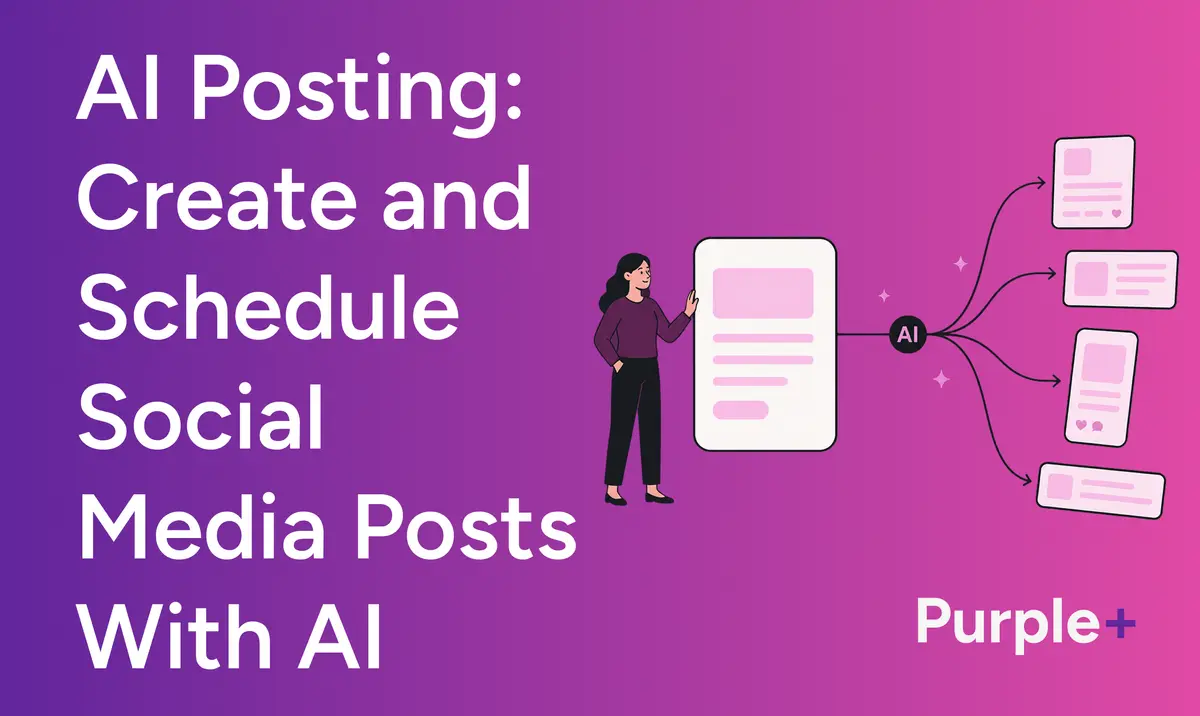
AI posting allows businesses to create and publish social media content with less manual work. Instead of writing every caption from scratch, marketers can use AI to generate post ideas, draft captions, adapt content for different platforms, and prepare posts for scheduling.
An AI post is only one part of the process. AI posting can also cover content adaptation, social media scheduling, publishing, and reviewing post performance.
For businesses that publish across several social channels, this approach can reduce repetitive tasks while making it easier to maintain a consistent publishing schedule.
What Is AI Posting?
AI posting uses artificial intelligence to create, prepare, schedule, and publish social media content. It can support different stages of the publishing process, from generating an initial idea to adapting content for specific platforms and reviewing post performance.
An AI posting workflow can begin with a product update, blog article, campaign brief, customer question, or simple content idea. AI can turn that input into a social media post, generate alternative versions, adjust the wording for different audiences, and organise the content for scheduled publishing.
This makes AI posting broader than using an AI writing tool to generate a caption. An AI post is an individual piece of content created with Artificial Intelligence, while AI posting is the broader process of creating, adapting, scheduling, publishing, and evaluating that content.
A typical workflow looks like this:
Content idea → AI-generated draft → Human review → Platform adaptation → Scheduling → Publishing → Performance analysis
This workflow connects content creation with the tasks required to manage social media at scale, reducing repetitive work while keeping human review and strategic decisions in the process.

How Does AI Posting Work?
AI posting can support a simple content task or a larger social media workflow. The process usually starts with information about the topic, target audience, platform, brand voice, and content goal.
How AI Creates an AI Post
AI can create a first draft from a short content brief. Instead of starting from a blank page, a marketer can provide the subject, audience, key message, tone, and call to action. The AI uses this information to produce a draft that can then be reviewed and edited.
A useful brief may include:
-
The product or service being promoted
-
The target audience
-
The purpose of the post
-
Key facts, features, or benefits
-
The preferred brand voice
-
The social media platform
-
The desired call to action
The AI can use these details to create a post more closely aligned with the intended message and audience. The marketer can then check the draft for accuracy, brand consistency, and platform suitability before publishing or scheduling it.
The quality of AI-generated content depends largely on the quality of the input. A specific brief gives AI more useful information than a broad request such as “write a social media post about our business.” This makes clear instructions and relevant source information an important part of an effective AI posting workflow.
How AI Adapts Posts for Different Platforms
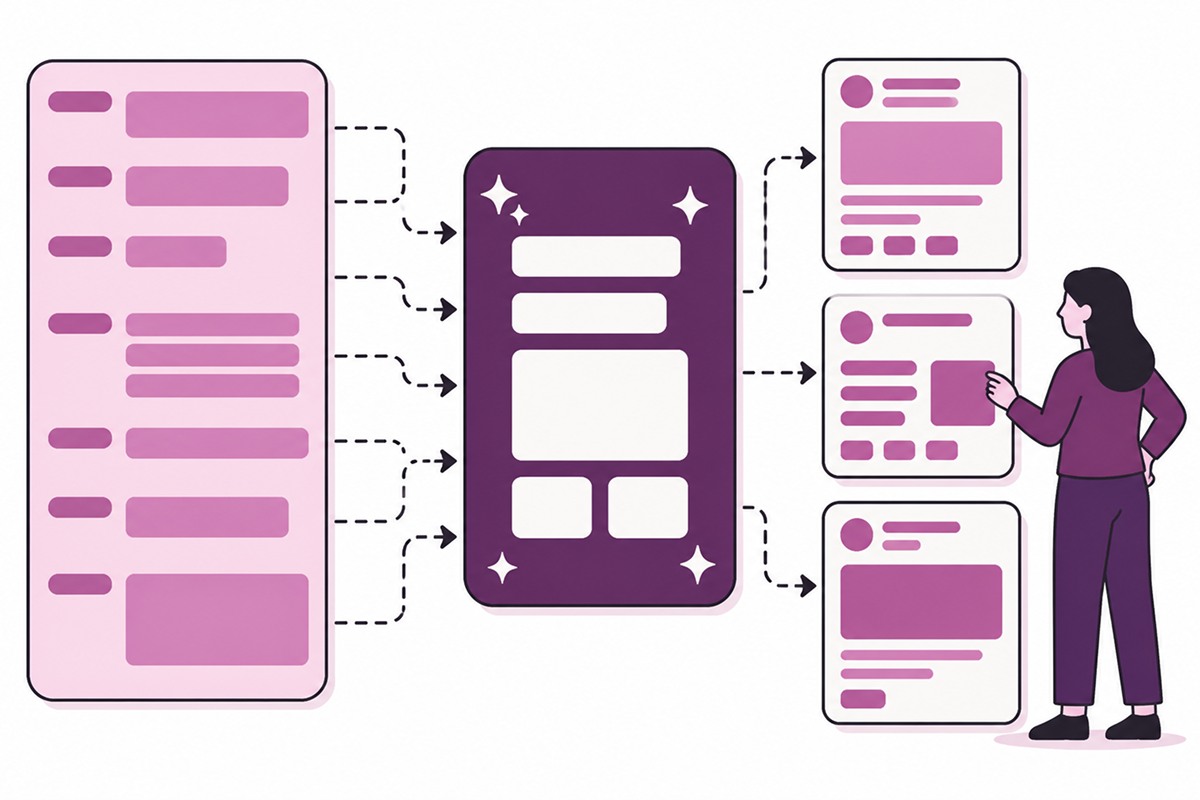
The same message does not need to use the same format on every social media platform. A LinkedIn post may require more context and a professional tone, while an Instagram caption may focus more on concise messaging, visual content, and engagement.
Each platform has its own audience expectations, character limits, formatting options, and content conventions. AI can use the same core message to create platform-specific versions while keeping the main idea and campaign message consistent.
This allows marketers to develop content from one concept rather than rewriting the same message from scratch for every channel.
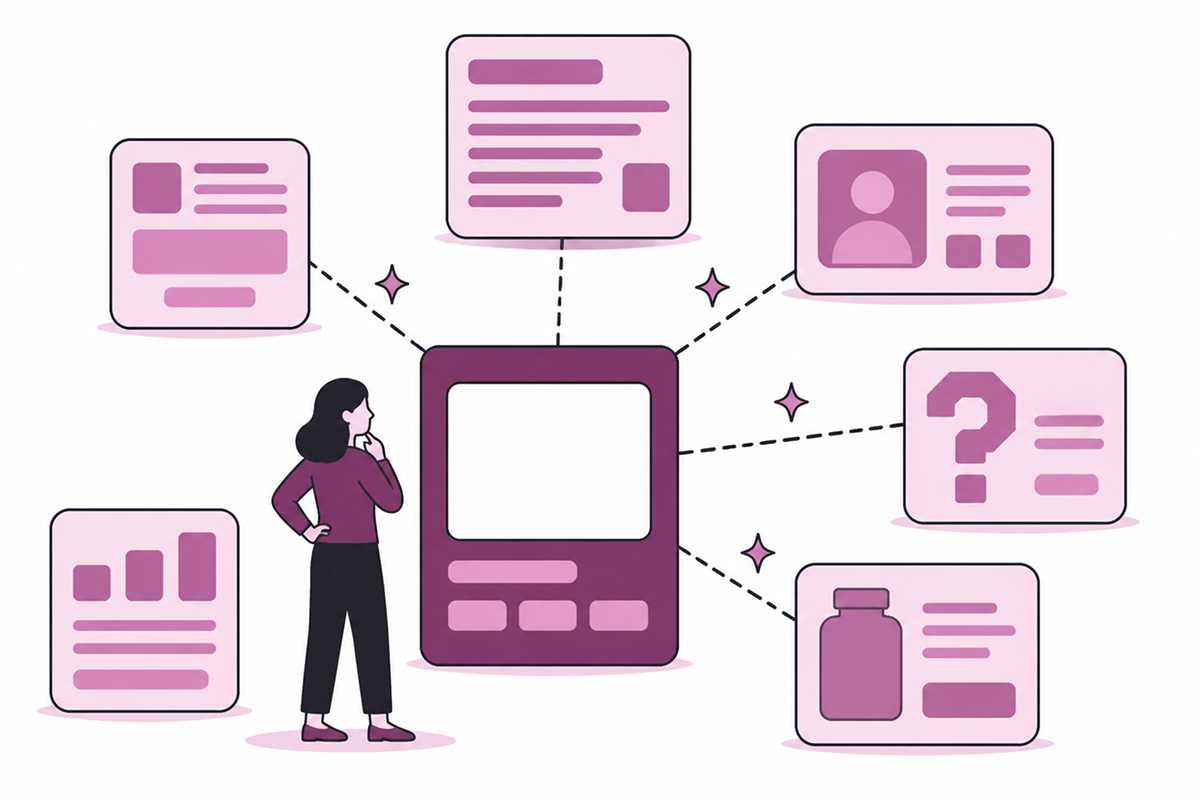
How AI Helps With Content Variations
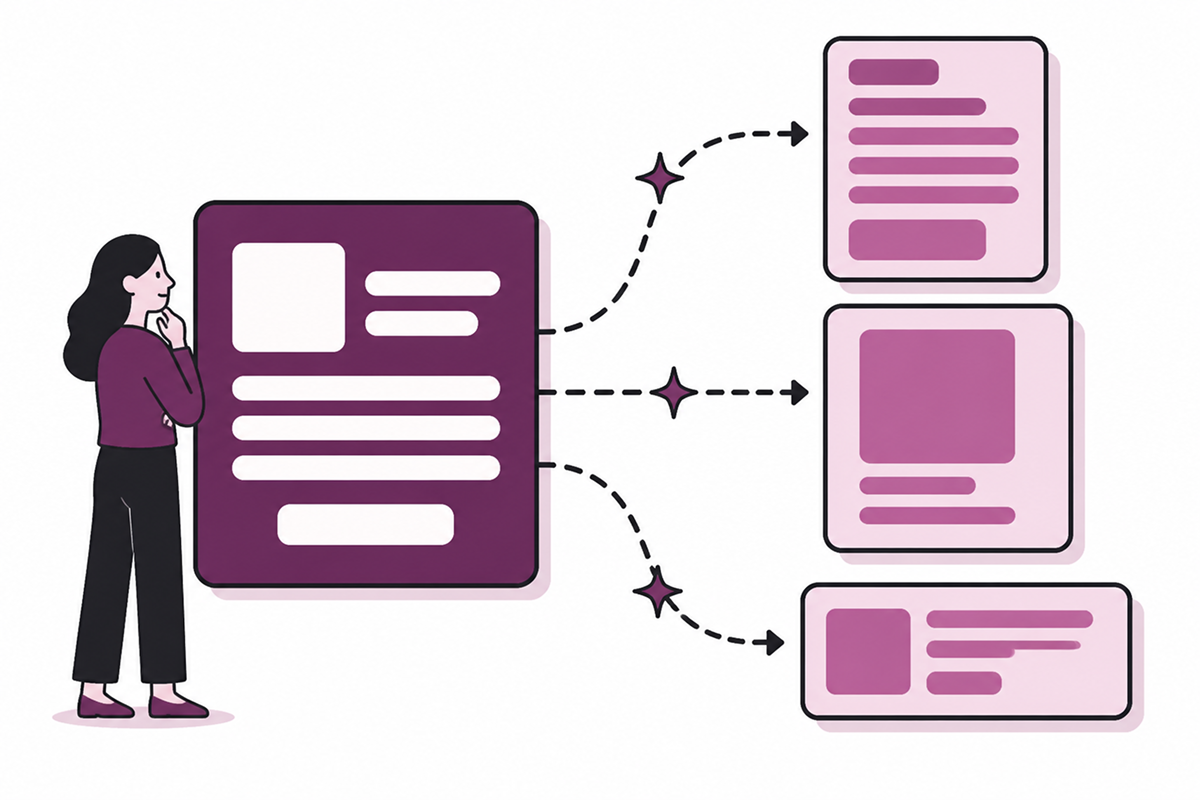
AI can also create different versions of a post based on the same campaign idea. Instead of repeating one message, marketers can change the angle, format, or purpose of each version.
For example, a single campaign idea could become:
-
An educational social media post
-
A short promotional post
-
A customer-focused version
-
A question designed to encourage comments
-
A post highlighting a product benefit
-
A post built around a statistic or industry insight
These variations can help fill a social media content calendar while keeping posts connected to the same campaign or topic.
They also reduce the need to publish identical messaging across multiple channels.
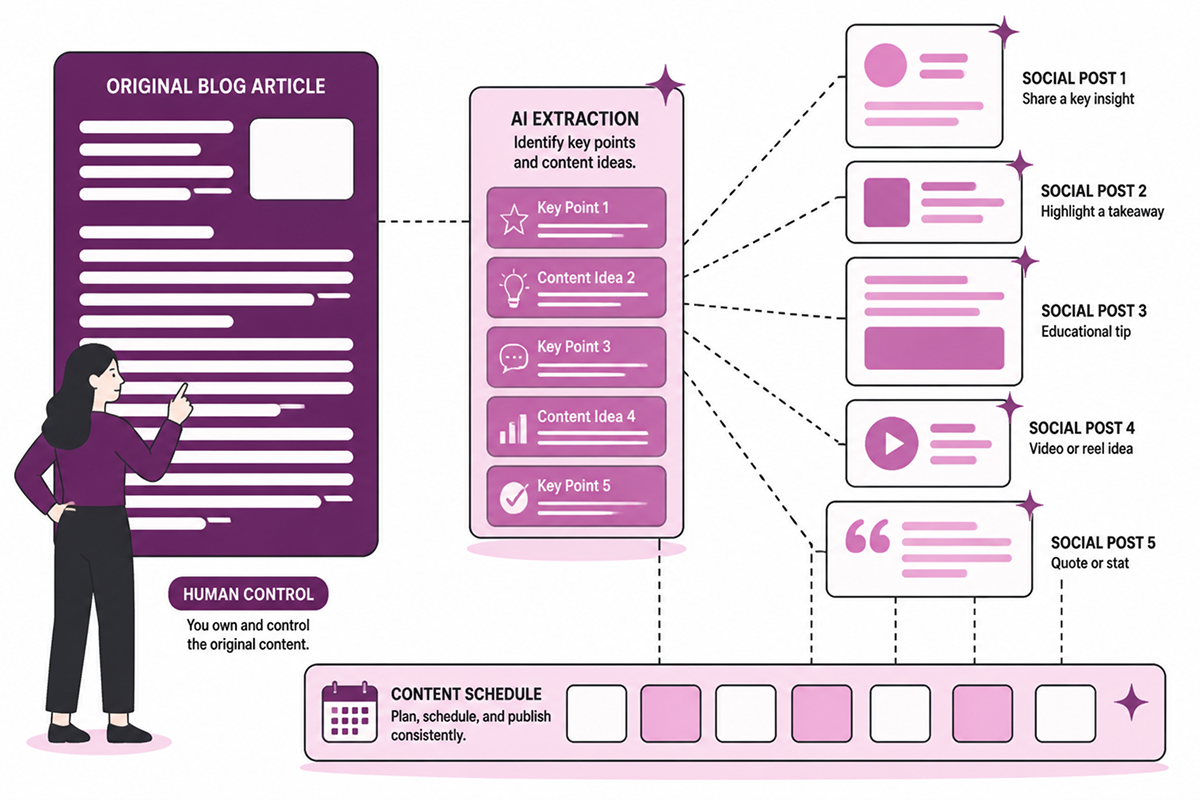
How to Write a Blog With AI and Turn It Into Social Posts
AI can connect long-form content with social media content creation, making existing marketing content easier to reuse. A detailed blog article, for example, may contain several useful ideas that can become individual social media posts.
Instead of creating each post from scratch, marketers can use AI to identify key points, extract useful insights, and turn them into shorter social content. This creates a workflow such as:
Blog article → key points → content ideas → AI social posts → platform-specific versions → scheduled posts
For example, one blog article could produce several social updates. One AI post could highlight the main finding, another could explain a specific recommendation, and another could ask the audience for their opinion on the topic.
This approach turns existing content into a source of new social media ideas. It also helps businesses maintain a consistent publishing schedule without requiring a completely new topic for every post.
The same process applies to newsletters, product pages, reports, case studies, webinars, customer questions, and other marketing materials. AI can turn these existing resources into additional content while marketers retain control over the message, accuracy, and final edits.
What Makes a Good AI Post?
Generating an AI post is relatively easy. Creating one that is relevant, accurate, and worth publishing requires more input and review.
A strong AI-generated social media post should have a clear purpose, useful information, a defined audience, and a reason for people to engage.
Start With a Clear Content Goal
Every post should have a specific purpose. The objective might be to:
-
Generate awareness
-
Drive website traffic
-
Promote a product or service
-
Explain a concept
-
Start a conversation
-
Support a campaign
-
Share useful information
-
Encourage sign-ups or enquiries
Giving AI a clear objective helps it produce content that supports a specific marketing goal, rather than generating a broad social media message.
Give AI the Right Context
AI needs relevant information about the business to create content that accurately reflects its offer and audience. Useful context can include the target audience, brand voice, product details, campaign message, key benefits, terminology, and any information that must be included or avoided.
Specific input gives AI clearer boundaries and makes it easier to produce a relevant AI post.
Keep the Brand Voice Consistent
A business should have a recognisable communication style across its social channels. AI-generated content can sound generic when it has no information about how the business normally communicates.
Providing examples of previous content, preferred terminology, tone, and messaging guidelines can help maintain consistency. AI should follow the brand voice rather than create a new one.
Adapt the AI Post to the Platform
Using the same AI-generated caption across every social channel can make content repetitive and poorly suited to individual platforms.
The core message can remain consistent, but its presentation should match the platform and audience. This may mean changing the opening line, length, formatting, call to action, or level of detail.
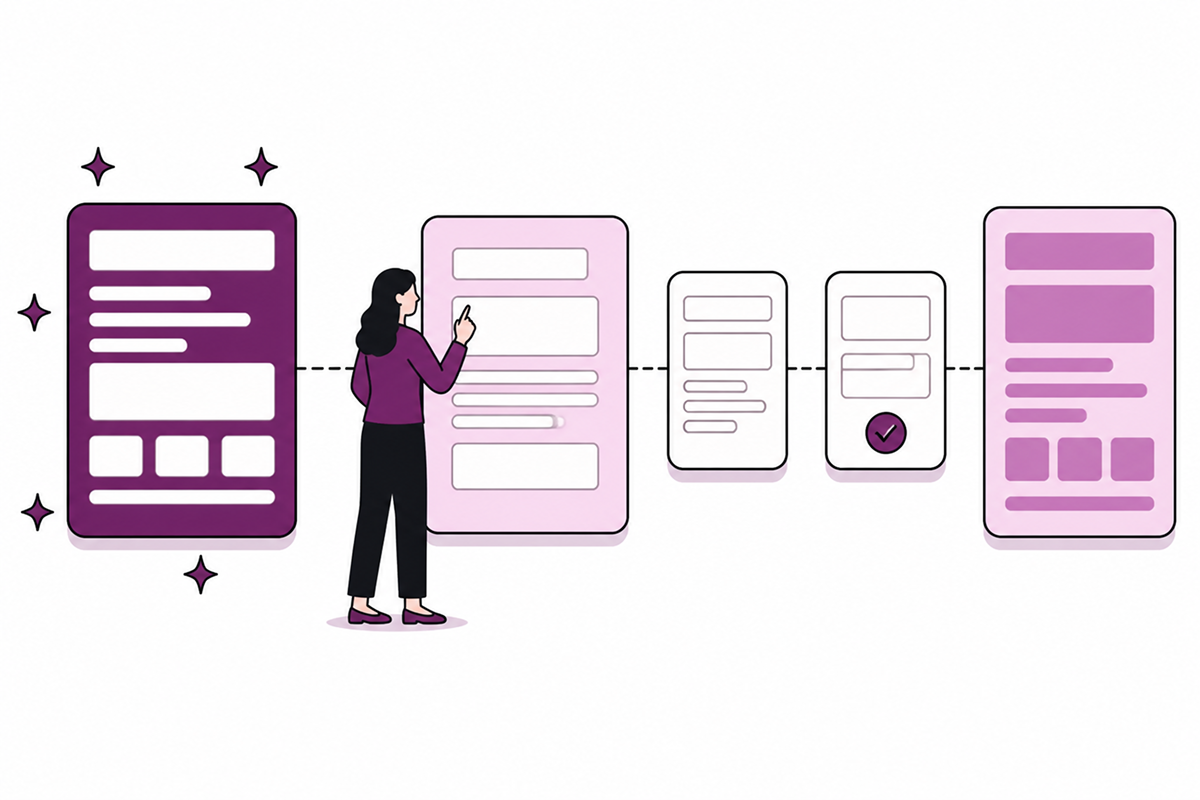
Review Before Publishing
Human review remains an important part of AI posting. Before publishing, marketers should check facts, claims, product information, brand references, links, offers, and calls to action.
It is also worth checking for repetitive wording, inaccurate statements, or content that doesn't reflect the company's actual services or communication style.
A reliable workflow is therefore:
AI → review → refine → approve → publish
This keeps AI responsible for much of the drafting work while leaving accuracy, brand decisions, and final approval with the marketing team.
AI Posting vs Manual Social Media Posting
Traditional social media publishing often requires marketers to handle several separate tasks. They may need to develop an idea, write the caption, create different versions, adapt the content for each platform, add posts to a scheduler, choose publishing times, and review performance.
AI posting can reduce the repetitive work involved in these tasks and connect more of them within a single content workflow.
|
Manual posting |
AI-assisted posting |
|
Start each post from scratch |
Generate an initial draft from a content brief |
|
Rewrite content for each channel |
Create platform-specific variations |
|
Develop multiple versions manually |
Generate alternative post ideas and formats |
|
Move content between separate tools |
Connect content creation with scheduling and publishing |
|
Build and organise posts individually |
Plan content around a publishing calendar |
|
Review performance separately |
Use performance data to inform future content |
The difference is mainly in how much manual production work is required. AI can help marketers create drafts, adapt content, generate variations, and organise publishing more efficiently.
It does not replace content strategy, brand decisions, or editorial judgement. Marketers still need to decide what the business should communicate, review AI-generated content, and evaluate whether published posts are achieving their goals.
How Posting AI Tools Fit Into a Social Media Workflow
Posting AI tools can support different parts of the social media workflow. Some focus mainly on generating captions and other text, while others combine AI content creation with features such as content calendars, social media scheduling, publishing, analytics, and campaign management.
The difference becomes important when several tools are involved. If a marketer creates an AI post in one application and then manually transfers it to a separate scheduler, content creation and publishing remain disconnected.
An integrated workflow can bring more of these tasks together:
Plan → create → edit → schedule → publish → analyse
This can save time for businesses that manage multiple social media accounts or publish content frequently, particularly when the same content needs to be adapted and scheduled across several channels.
Can AI Post to Social Media Automatically?
AI content generation and automated social media publishing are separate functions. An AI writing tool can create the text of a post, while a social media management platform can handle scheduling, publishing, and other workflow tasks.
A more advanced AI posting workflow can connect these stages. For example:
1. Identify a content opportunity
2. Generate the post
3. Adapt it for the selected platforms
4. Review and approve the content
5. Schedule the post
6. Publish automatically
7. Analyse engagement and results
The level of automation depends on the tools being used and the publishing workflow a business has established. Human approval can remain part of the process, particularly for promotional claims, sensitive topics, or content that requires close brand control.
The main benefit of automation is reducing repetitive publishing tasks while keeping marketers in control of the content their brand publishes.
How to Build an AI Posting Workflow
You can build an effective AI posting process through a series of straightforward steps. The key is to connect content creation with review, platform adaptation, scheduling, and performance analysis.
Step 1: Choose the Content Idea
Start with a specific topic, campaign, product, customer question, or existing content you can turn into a social media post.
Step 2: Define the Audience and Goal
Specify who the content is for and what you want the audience to do after seeing it. A clear objective gives the AI a stronger direction when creating the post.
Step 3: Create the AI Post
Generate an initial version using the available information, content brief, and brand guidelines.
Step 4: Review and Improve the Content
Check the draft for accuracy, tone, clarity, originality, and relevance. Remove generic wording and add details that make the content specific to the business and its audience.
Step 5: Create Platform-Specific Versions
Adapt the core message for each selected social media channel instead of publishing identical content everywhere. Adjust elements such as length, opening, formatting, and call to action where needed.
Step 6: Add Posts to the Content Calendar
Organise the content around campaigns, topics, publishing frequency, and important dates. This makes individual AI-generated posts part of a planned content schedule.
Step 7: Schedule and Publish
Once the content has been reviewed and approved, schedule it for the appropriate time and social media channels.
Step 8: Analyse Performance
Review relevant metrics such as engagement, reach, clicks, conversions, and other campaign results. Use these insights to identify which topics, formats, and messages perform well and improve future content.
A structured workflow turns AI posting into an ongoing process: create → review → publish → measure → improve.
What Can AI Create for Social Media?
AI can create or help adapt many types of social media content, including:
-
Educational posts
-
Promotional content
-
Product announcements
-
Industry insights
-
Customer-focused content
-
Event promotions
-
Engagement questions
-
Tips and short-form advice
-
Blog promotion posts
-
Campaign variations
-
Repurposed content
The value of AI posting is not measured by the number of posts it can produce. Each piece of content should support a specific marketing objective and provide something relevant to the intended audience.
Publishing hundreds of generic AI posts will not automatically create a stronger social media presence.
A smaller number of relevant, well-planned posts can deliver more value when they are aligned with the brand, audience, campaign goals, and chosen platforms.
The Most Common AI Posting Mistakes
AI posting can reduce repetitive work, but poor implementation can lead to repetitive, inaccurate, or ineffective social media content.
Publishing the First AI Draft
Treat an AI-generated post as a draft, not as automatically publishable content. Review the wording, facts, brand references, and message before the post goes live.
Using Generic Prompts
A vague prompt usually produces broad and predictable content. Include information about the audience, marketing goal, platform, brand voice, offer, and key message to give AI enough context.
Posting Identical Content Everywhere
Cross-posting can save time, but copying the same post across every platform may ignore differences in audience behaviour, formatting, and content expectations. Adapt the core message for each relevant channel.
Ignoring Brand Voice
AI-generated content can become repetitive when every post uses similar wording, sentence structures, and calls to action. Brand guidelines and examples of existing content can help keep the messaging consistent.
Automating Without Reviewing
Automation can handle repetitive publishing tasks, but it should not remove quality control. Review and approve posts before scheduling, especially when they include product claims, offers, statistics, or other business-specific information.
Focusing on Volume
AI can make it easier to produce a large number of posts, but publishing more content does not automatically improve social media performance. AI posting should support the content strategy, audience needs, and campaign objectives rather than become a goal in itself.
AI Posting for Small Businesses
Small businesses often have limited time for social media marketing. The same person may handle content planning, customer communication, marketing campaigns, and daily operations.
AI posting can reduce repetitive work involved in maintaining a consistent publishing schedule. Instead of creating every post independently, a business can plan content around recurring themes, campaigns, products, educational topics, and existing marketing materials.
AI can turn these inputs into draft posts and content variations, while social media scheduling tools can organise them for publication. This gives small businesses a more structured way to maintain their social media presence without creating every post manually. For businesses looking to bring these activities into one workflow, marketing software for small businesses can help connect different marketing tasks in one platform.
AI Posting Is More Than AI Writing
The main value of AI posting is not simply generating a caption. It comes from connecting content creation with the other tasks involved in managing social media.
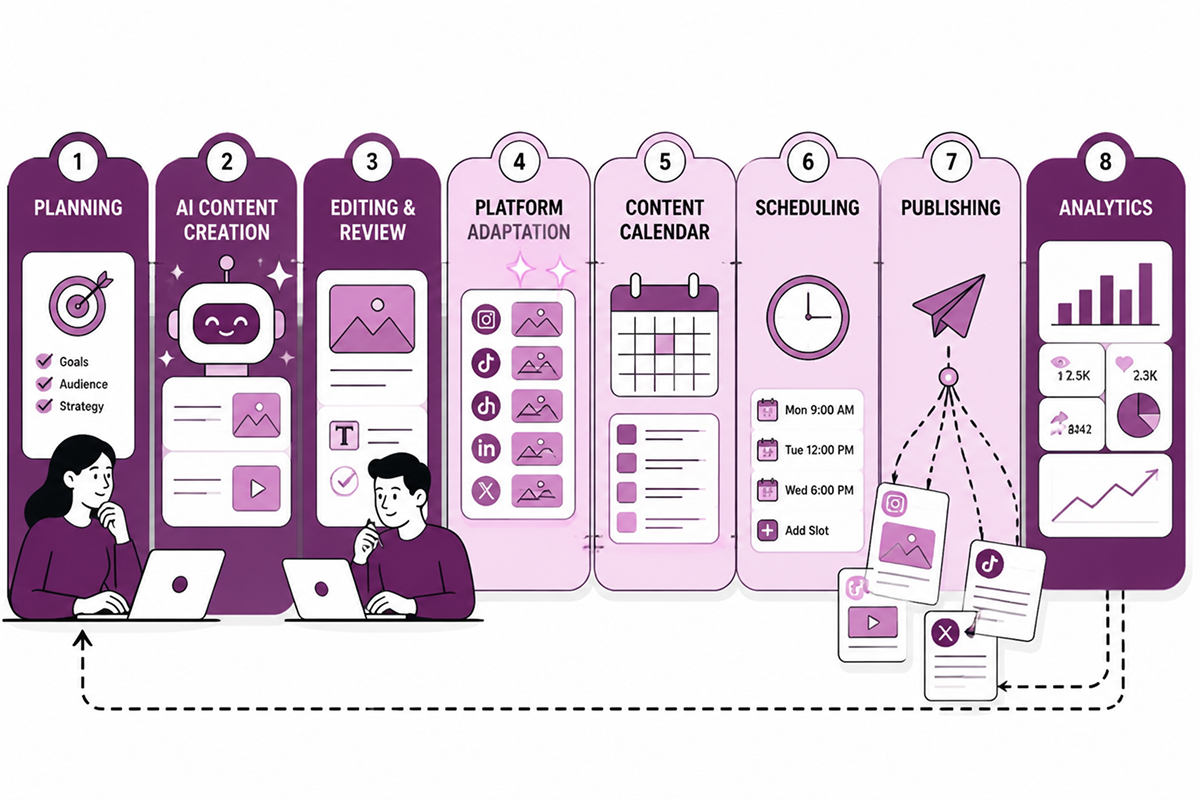
A modern workflow can move through several stages:
Idea → AI content creation → editing → platform adaptation → content calendar → scheduling → publishing → analytics
This makes AI part of the wider social media management process rather than a standalone writing tool.
The purpose is not to remove people from content creation. AI can handle repetitive production tasks, giving marketers more time for content strategy, creative decisions, audience relationships, and activities that require human judgement.
How Purple+ Enables AI Posting
Purple+ connects AI content creation with social media management in one marketing workflow.
Instead of handling AI content generation and social media publishing as separate tasks, businesses can use one platform to plan content, create posts, organise them in a content calendar, schedule publishing, and manage social media activity.
This is useful for businesses that need to turn a steady flow of ideas, campaigns, and marketing content into consistent social media publishing without managing each stage in separate tools.
AI helps accelerate content production, while marketers remain responsible for setting the direction, reviewing the output, and deciding what gets published.
Frequently asked questions
Written by
AI & SEO Content writer
Tetiana Reusche is an SEO Content Strategist and AI marketing specialist who specialises in creating content that helps businesses improve their online visibility and turn organic traffic into business growth. Her work combines search strategy, content marketing, and AI-driven optimisation to produce content that performs across search engines, answer engines, and modern AI-powered discovery platforms. Over the years, she has developed SEO strategies and content frameworks for companies in the SaaS, software, miltech, travel, real estate, home renovation, lifestyle, and entertainment industries. She enjoys translating complex topics into practical, engaging content that is valuable for both readers and search engines. Tetiana focuses on building topical authority through strategic keyword research, content planning, search intent analysis, and well-structured content ecosystems. She regularly creates keyword clusters, content recommendations, editorial roadmaps, and SEO strategies that help brands reach the right audience, strengthen their authority, and generate meaningful business results. Her articles explore SEO, AI-powered marketing, social media management, content strategy, and digital growth, with a practical focus on helping businesses create discoverable, useful content designed to convert.